
Table of Contents
Solar Panels Installed on Commercial Flat
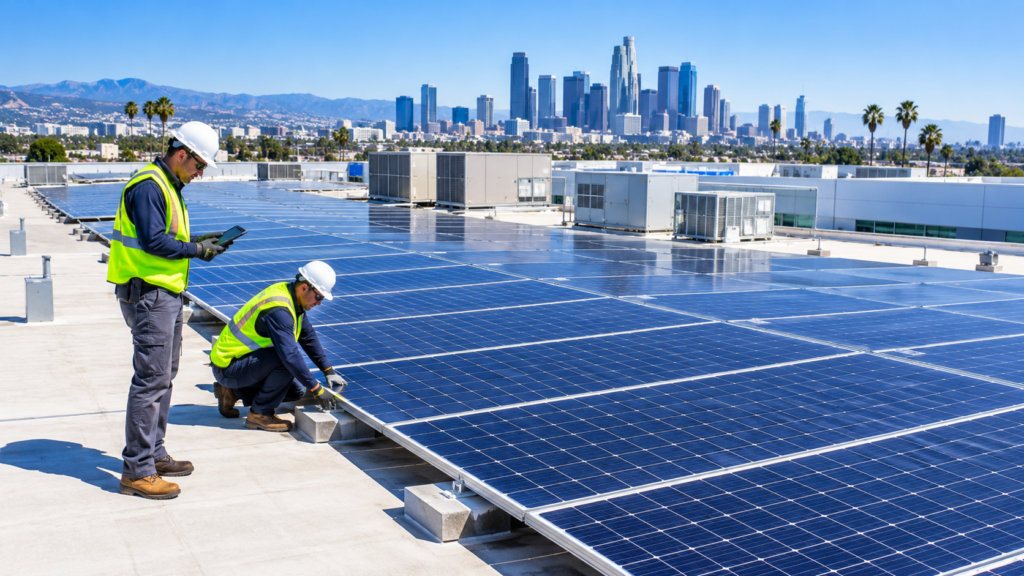
Commercial flat roofs are often excellent locations for solar panel installations. Warehouses, office buildings, retail centers, and industrial facilities may have large rooftop areas that can be used to generate electricity. However, installing solar panels on a commercial flat roof requires careful planning, structural evaluation, and the right mounting system.
Unlike residential pitched roofs, commercial flat roofs usually need specially designed mounting structures to position solar panels at an effective angle. Installers must also consider roof weight, drainage, wind exposure, electrical equipment, and rooftop access.
For businesses in Los Angeles and Southern California, a properly designed commercial rooftop solar system can help reduce electricity expenses and make better use of available building space.
Step 1: Inspect the Commercial Roof
The first step is a detailed roof inspection. Before installing solar equipment, the contractor needs to understand the roof’s condition, construction, and available installation area.
The inspection typically considers:
- Roof material and waterproofing condition.
- Existing leaks, cracks, or damaged sections.
- Roof age and expected remaining service life.
- Drainage outlets and water-flow paths.
- HVAC units, vents, skylights, and other rooftop equipment.
- Available access routes for installation and maintenance.
If the roof needs major repairs or replacement, completing that work before installing solar panels may help avoid the expense of removing and reinstalling the solar equipment later.
Step 2: Evaluate Structural Capacity
Commercial solar panels, mounting structures, wiring equipment, and ballast add weight to a building. The roof structure must be capable of supporting the proposed system.
A structural evaluation considers the building’s design, existing loads, proposed solar equipment, and applicable environmental loads.
Wind is particularly important for flat-roof installations. Solar panels can experience uplift forces, especially on exposed rooftops and taller buildings. The mounting system must be designed to handle the applicable wind conditions.
Depending on the building and project, a qualified structural engineer may need to review or approve the proposed installation design.
Skipping this step can create serious safety and building-performance concerns.
Step 3: Design the Solar Panel Layout
Once the roof is evaluated, the solar contractor develops a layout showing where the panels and supporting equipment will be installed.
The design should account for:
Available roof space: Not every square foot can be covered with solar panels. HVAC equipment, vents, skylights, and access areas reduce the usable space.
Panel orientation: The direction of the panels affects how much sunlight they receive throughout the day.
Panel tilt: Mounting structures position panels at a suitable angle for the project’s location and design requirements.
Row spacing: Panels may need spacing to reduce shading between rows.
Maintenance access: Technicians need safe access to roof equipment, drains, and other building systems.
Electrical equipment location: Inverters, disconnects, conduit routes, and other electrical components must be placed according to the system design and applicable requirements.
A good layout balances energy production, roof space, safety, and long-term maintenance.
Step 4: Select the Right Mounting System
Commercial flat-roof solar installations commonly use ballasted or mechanically attached mounting systems. The correct option depends on the roof construction, structural capacity, wind conditions, and waterproofing requirements.
Ballasted Mounting Systems
Ballasted systems use calculated weights to hold the solar panel mounting structure in position. Some designs can avoid penetrating the roof’s waterproofing membrane.
This can be beneficial when limiting roof penetrations is important. However, the additional weight must be included in the structural evaluation, and the system must be designed for wind resistance.
Mechanically Attached Mounting Systems
Mechanically attached systems secure the mounting structure to suitable building structural elements.
They can provide a secure attachment approach, but roof penetrations must be carefully designed and waterproofed. The installation must remain compatible with the existing roofing system.
The contractor should select a mounting system based on engineering requirements rather than choosing one simply because it is easier to install.
Step 5: Prepare the Roof for Installation
Before solar equipment is installed, the rooftop needs to be prepared.
This work may include repairing damaged roofing areas, cleaning the installation surface, confirming drainage paths, and marking the approved panel layout.
Installers also identify locations for mounting equipment, electrical conduits, inverters, and other components.
Roof protection is especially important during commercial solar installation. Tools, equipment, and foot traffic should not damage the waterproofing membrane.
The preparation stage helps reduce installation problems and protects the building’s existing roof system.
Step 6: Install the Mounting Structures and Solar Panels
After preparation and layout approval, the installation team begins assembling the mounting structures.
The process generally includes:
- Positioning mounting components according to the approved design.
- Installing ballast or mechanical attachments as specified.
- Checking alignment, spacing, and mounting security.
- Securing solar panels to the mounting structures.
- Confirming that access paths and drainage areas remain clear.
Panels should be installed according to the manufacturer’s instructions and the approved engineering design.
The installation team must also follow applicable site-safety procedures, particularly when working on large commercial rooftops.
Step 7: Complete the Electrical Installation
After the panels and mounting structures are installed, the electrical work connects the solar array to the building’s electrical system.
Depending on the system design, this may involve:
- Connecting solar panels into electrical strings or using module-level electronics.
- Installing and connecting inverters.
- Routing and securing electrical conduits.
- Installing required disconnects and protective equipment.
- Connecting the system to the appropriate electrical distribution equipment.
- Providing monitoring equipment where included in the design.
Commercial buildings may have more complex electrical requirements than residential properties. The existing service capacity, distribution equipment, utility interconnection requirements, and building load should be evaluated during system design.
All electrical work must follow applicable electrical codes, equipment instructions, and permitting requirements.
Step 8: Testing, Inspection, and System Commissioning
Before the commercial solar system begins normal operation, the installation needs to be inspected and tested.
This stage may include checking electrical connections, verifying equipment operation, reviewing system safety features, and confirming monitoring functionality.
Required permits and inspections must be completed, and utility approval or permission to operate may be necessary before the system can export electricity or operate in its intended grid-connected configuration.
The commissioning process helps confirm that the installed system matches the approved design and is ready for operation.
What Factors Affect Commercial Flat-Roof Solar Installation Costs?
The cost of installing solar panels on a commercial flat roof depends on the building and project requirements.
Major cost factors include:
- Total solar system capacity.
- Number and type of solar panels.
- Mounting structure and ballast requirements.
- Roof condition and necessary repairs.
- Structural engineering requirements.
- Inverters and electrical equipment.
- Conduit routing and electrical connection complexity.
- Permits, inspections, and utility interconnection.
- Roof accessibility and installation conditions.
A large roof does not automatically mean a low installation cost. Buildings requiring structural improvements, extensive electrical work, or specialized mounting equipment may need a larger project budget.
A property-specific assessment is the best way to develop a realistic installation estimate.
Common Mistakes to Avoid During Commercial Rooftop Solar Installation
Commercial property owners should watch for several common installation mistakes.
Ignoring roof condition: Installing solar panels over a roof that needs major repairs can create additional costs later.
Skipping structural evaluation: The roof must be evaluated for the proposed equipment weight and applicable environmental loads.
Blocking drainage paths: Poor panel placement can interfere with water drainage and contribute to roof problems.
Using an unsuitable mounting system: The mounting design must match the roof construction and project conditions.
Poor electrical planning: Inadequate planning for inverters, conduit routes, and electrical connections can complicate installation.
Ignoring future maintenance: The layout should allow access to rooftop equipment and important building systems.
Working with an experienced electrical and solar contractor helps address these considerations before installation begins.
Is Commercial Flat-Roof Solar Worth Considering in Los Angeles?
For many commercial properties, rooftop solar is worth evaluating because it can turn otherwise unused roof space into an electricity-generating asset.
Businesses with substantial daytime electricity consumption may benefit from a system designed around their actual energy usage. Warehouses, office buildings, retail properties, and industrial facilities can all be candidates, depending on their roof and electrical conditions.
The right approach starts with reviewing electricity bills, assessing usable roof space, evaluating structural capacity, and understanding the property’s electrical infrastructure.
The final system should be designed around the building rather than simply maximizing the number of panels installed.
Frequently Asked Questions
Can solar panels be installed on any commercial flat roof?
No. The roof must be evaluated for its condition, structural capacity, waterproofing, wind exposure, drainage, and available space before installation.
Do commercial flat-roof solar panels need to be tilted?
Usually, yes. Mounting structures position the panels at a suitable angle based on the system design, location, shading, and wind requirements.
Will installing solar panels damage a commercial roof?
A properly designed installation should protect the roof system. Ballasted systems may avoid roof penetrations, while mechanically attached systems require carefully sealed penetrations.
How long does commercial flat-roof solar installation take?
The timeline depends on system size, roof preparation, engineering, permitting, equipment availability, and inspections. Larger or more complex projects generally require more time.
Can an existing commercial building be upgraded with solar panels?
Yes. Existing commercial buildings can often be evaluated for solar installation. Their roof condition, structural capacity, electrical infrastructure, and energy consumption must be reviewed first.
Plan Your Commercial Solar Installation with ReVamp Energy
Installing solar panels on a commercial flat roof involves much more than placing panels on an open surface. Roof inspection, structural evaluation, mounting design, electrical planning, and proper commissioning all contribute to a successful project.
ReVamp Energy provides commercial solar system design and installation services for businesses in Los Angeles and Southern California. Our team can help evaluate your property’s requirements and develop a solar solution based on your building and energy needs.
Ready to explore commercial rooftop solar? Get Your Free Energy Consultation with ReVamp Energy.