
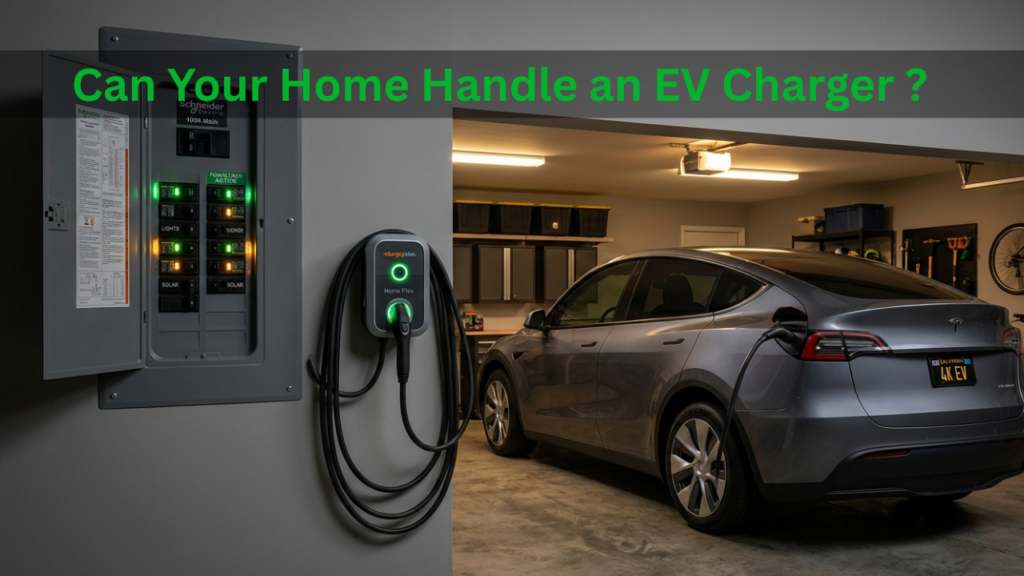
Can Your Home Handle an EV Charger? Hidden Electrical Limits You Must Know (2026)
Table of Contents
Introduction
Installing an EV charger at home sounds simple—but most homeowners overlook one critical question: can your home actually handle it?
While EV chargers offer convenience and long-term savings, they also place a heavy load on your electrical system. Many homes, especially older ones, are not designed to support this additional demand.
Before installing a charger, it is important to understand your home’s electrical capacity and hidden limitations.
Why EV Chargers Require High Power
EV chargers, especially Level 2 systems, consume a significant amount of electricity.
They typically require:
- 240V connection
- 30 to 60 amps dedicated circuit
This is much higher than standard household appliances, which means your panel must have enough capacity to support it.
The Most Common Problem Homeowners Face
The biggest issue is not the charger itself—it is the electrical panel.
Many homes have 100 amp panels, which were designed for older energy needs. Adding an EV charger can push the system beyond its safe limit.
This can lead to:
- Frequent breaker trips
- Overheating wires
- Reduced efficiency
- Safety risks
How to Check If Your Home Can Handle an EV Charger
There are a few key things to evaluate:
1. Electrical Panel Capacity
Check whether your panel is rated at 100A, 150A, or 200A.
Most modern EV charger installations require at least a 200 amp panel for safe operation.
2. Available Load Capacity
Your panel may be 200 amps, but that does not mean all capacity is available.
Existing appliances like HVAC systems, ovens, and dryers already consume power. You need enough remaining capacity to support the charger.
3. Dedicated Circuit Requirement
EV chargers require a dedicated circuit.
If your panel does not have space for an additional breaker, modifications or upgrades may be required.
Signs Your Home May Not Be Ready
You may need an upgrade if you notice:
- Frequent breaker trips
- Flickering lights when appliances run
- Limited breaker space
- Old or outdated panel
- Overuse of extension cords
These signs indicate your system is already under stress.
Do You Always Need a Panel Upgrade?
Not always.
In some cases, your existing panel can support an EV charger if:
- Your total load is within limits
- You install a lower-capacity charger
- Load management solutions are used
However, many homeowners eventually upgrade to ensure safety and future flexibility.
What Happens If You Ignore Electrical Limits
Installing an EV charger without proper evaluation can lead to serious problems.
- Electrical overload
- Damage to appliances
- Increased fire risk
- Frequent system failures
This is why proper assessment is critical before installation.
Smart Solutions If Your Panel Is Not Enough
If your panel cannot handle the load, you still have options:
- Upgrade to a 200 amp panel
- Install a load management system
- Use a lower amp EV charger
- Optimize existing electrical usage
Each solution depends on your home’s current setup.
Future-Proofing Your Home
As energy demand continues to increase, homes need to be prepared.
EV chargers, solar panels, and battery systems all require additional capacity.
Upgrading your panel ensures your home can support future technologies without repeated modifications.
Conclusion
So, can your home secretly handle an EV charger?
The answer depends on your electrical panel capacity, available load, and overall system condition.
Many homes are not fully prepared, but with proper planning and evaluation, you can safely install an EV charger and avoid costly issues.
FAQs
Can a 100 amp panel handle an EV charger
In most cases, it is not sufficient without load management or upgrades.
Do I need 200 amps for EV charger
Yes, it is recommended for safe and efficient operation.
What voltage is required for EV charger
Most Level 2 chargers require 240 volts.
Can I install EV charger without upgrading panel
It depends on available load capacity and system condition.