
Introduction
Commercial solar energy has become one of the most effective ways for businesses to reduce operating costs, improve energy efficiency, and gain greater control over electricity expenses.
As utility rates continue to rise throughout California, many business owners are exploring solar energy as a long-term investment that can deliver savings for years to come.
However, before moving forward, many business owners want to understand exactly what happens during a commercial solar installation project.
The commercial solar installation process involves much more than simply placing panels on a roof. A successful project requires careful planning, engineering, electrical design, permitting, installation, testing, and system activation.
Understanding each step can help businesses make informed decisions and know what to expect throughout the project.
Why Businesses Are Investing in Commercial Solar
Commercial properties typically consume large amounts of electricity every day.
Examples include:
- Office buildings
- Retail centers
- Warehouses
- Manufacturing facilities
- Apartment communities
- Medical offices
- Hospitality properties
Because energy costs represent a significant operating expense, many businesses are turning to solar energy to improve financial performance.
Benefits of commercial solar include:
- Reduced utility bills
- Long-term energy savings
- Increased property value
- Energy independence
- Sustainability improvements
- Predictable energy costs
For many organizations, solar is both a financial and operational investment.
Step 1: Initial Consultation
Every commercial solar project begins with a consultation.
During this stage, solar professionals evaluate the property’s energy goals and discuss project objectives.
Common topics include:
- Current electricity usage
- Monthly utility expenses
- Building characteristics
- Future expansion plans
- Budget considerations
This information helps determine whether solar is a good fit for the property.
Step 2: Site Assessment
A detailed site assessment is one of the most important phases of the project.
The purpose is to evaluate the property’s suitability for solar installation.
Factors commonly assessed include:
Roof Condition
The roof must be capable of supporting the solar system.
Available Space
The amount of usable roof area influences system size.
Sunlight Exposure
Technicians evaluate shading from nearby structures or trees.
Electrical Infrastructure
Existing electrical equipment is inspected to determine compatibility.
Accurate site assessments help ensure optimal system performance.
Step 3: Energy Analysis
The next step involves reviewing the property’s energy consumption patterns.
This analysis helps determine:
- System size requirements
- Estimated energy production
- Future energy needs
- Potential savings opportunities
The goal is to design a solar system that aligns with the property’s electrical demand.
Step 4: Solar System Design
Once data has been collected, engineers begin designing the system.
This stage includes:
- Panel placement
- Electrical layout
- Equipment selection
- Structural considerations
- Energy production estimates
Proper design ensures efficiency, safety, and long-term performance.
A well-designed commercial solar system is customized to the property’s specific needs.
Step 5: Permits and Approvals
Commercial solar projects typically require permits and approvals before installation can begin.
This phase may involve:
- Building permits
- Electrical permits
- Utility coordination
- Engineering documentation
Proper permitting helps ensure compliance with local regulations and electrical standards.
Step 6: Equipment Procurement
After approvals are secured, project equipment is ordered.
This may include:
- Solar panels
- Inverters
- Mounting systems
- Electrical components
- Monitoring equipment
Quality equipment plays a major role in system reliability and long-term performance.
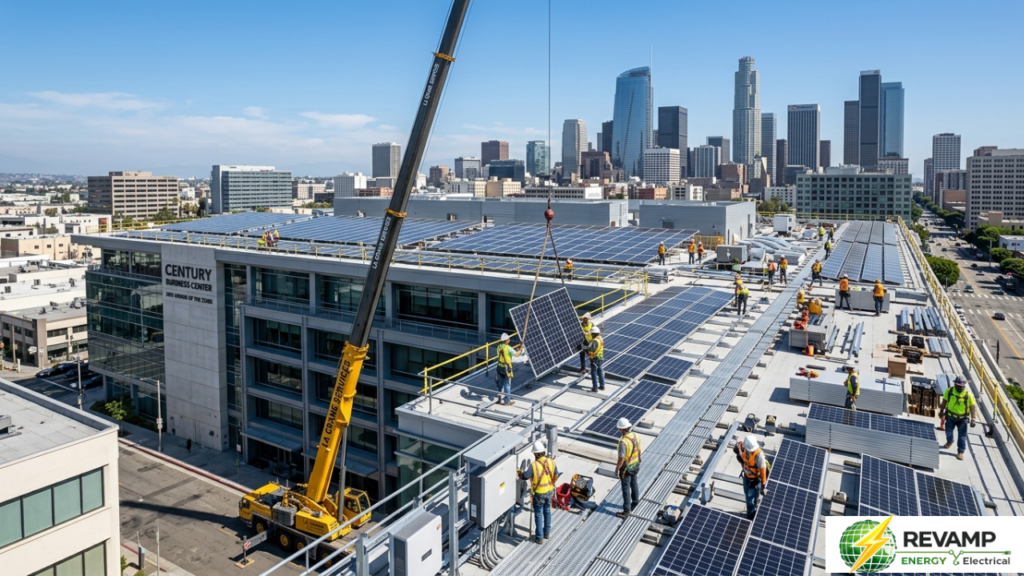
Step 7: Installation Begins
The installation phase is when the project becomes visible on-site.
Installation teams begin by preparing the roof and mounting infrastructure.
Activities typically include:
- Mounting system installation
- Solar panel placement
- Electrical wiring
- Inverter installation
- Equipment integration
Commercial installations are carefully planned to minimize disruption to business operations whenever possible.
Step 8: Electrical Integration
Solar panels generate electricity, but proper electrical integration is necessary for safe operation.
This phase involves connecting the solar system to the property’s electrical infrastructure.
Work may include:
- Electrical panel connections
- Safety equipment installation
- Monitoring system setup
- Load management considerations
Professional electrical installation is critical for long-term system performance.
Step 9: Inspection and Testing
Before activation, the system undergoes inspection and testing.
Technicians verify:
- Electrical safety
- Equipment operation
- System performance
- Code compliance
Thorough testing helps identify and resolve issues before the system goes live.
Step 10: System Activation
Once approvals are complete, the solar system is activated.
At this stage, the property begins generating electricity from solar energy.
Business owners can start monitoring:
- Energy production
- System performance
- Electricity savings
- Operational efficiency
This marks the completion of the installation process.
Common Questions Business Owners Have
How Long Does Installation Take?
Project timelines vary depending on:
- Property size
- System complexity
- Permitting requirements
- Equipment availability
Will Business Operations Be Interrupted?
Most commercial solar projects are carefully planned to minimize disruptions.
Can Solar Be Expanded Later?
Many systems can be designed with future expansion in mind.
Planning ahead often makes future upgrades easier and more cost-effective.
Why Businesses Choose ReVamp Energy Solutions
ReVamp Energy Solutions helps businesses throughout Los Angeles and surrounding areas navigate every stage of the commercial solar installation process.
Our services include:
- Commercial solar installation
- Electrical upgrades
- Battery backup systems
- Energy planning
- Solar removal and reinstallation
- Commercial electrical services
We focus on creating customized solar solutions designed to maximize long-term value, efficiency, and reliability.
Our team works closely with property owners from initial consultation through final activation to ensure a smooth installation experience.
What Makes ReVamp Different
- Customized system designs
- Professional project management
- Future-focused energy planning
- High-quality workmanship
- Expertise in solar and electrical systems
We help businesses invest in energy infrastructure that supports growth and long-term savings.
Conclusion
The commercial solar installation process involves careful planning, engineering, permitting, installation, and testing.
While every project is unique, understanding each stage helps business owners feel more confident when investing in solar energy.
A professionally designed solar system can reduce operating costs, improve energy efficiency, and provide long-term value for commercial properties.
For businesses looking to take control of their energy future, commercial solar remains one of the most powerful investments available today.
FAQs
What is the first step in a commercial solar installation?
The process typically begins with a consultation and site assessment.
How long does a commercial solar project take?
Timelines vary depending on project size, permitting, and installation requirements.
Can commercial solar reduce electricity costs?
Many businesses install solar specifically to reduce long-term energy expenses.
Do commercial solar systems require maintenance?
Regular inspections and maintenance help ensure optimal performance throughout the system’s lifespan.
Can solar be combined with battery storage?
Yes. Many businesses integrate battery backup systems to improve energy management and resilience.