
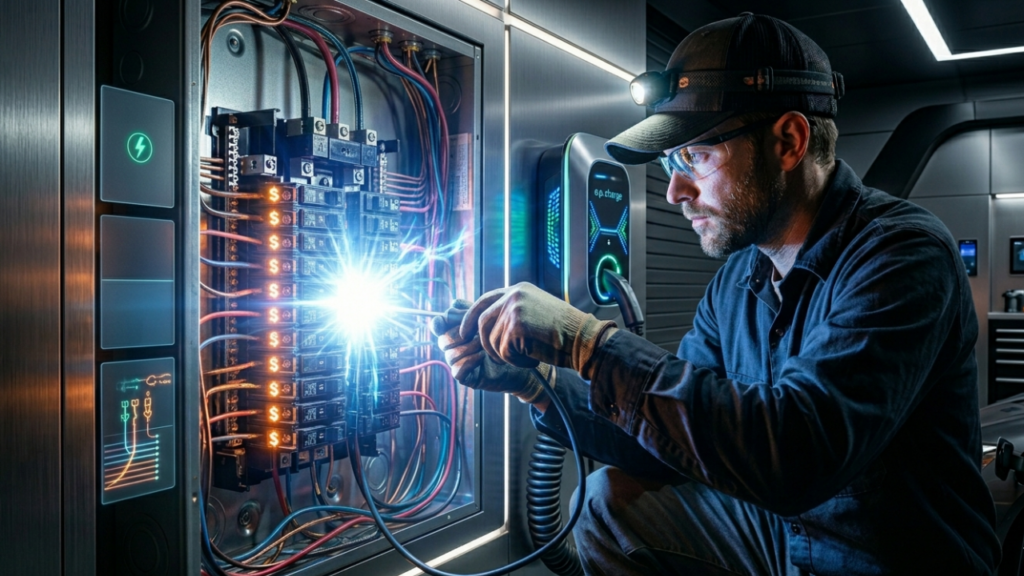
Can Your Electrical Panel Handle an EV Charger?
Table of Contents
Introduction
As electric vehicles become more common, many homeowners are asking if their current electrical system can support EV charging. Understanding whether your panel can handle an EV charger is essential before installation.
In many cases, older panels may not have enough capacity, which can lead to safety issues or the need for upgrades.
What Does an EV Charger Require
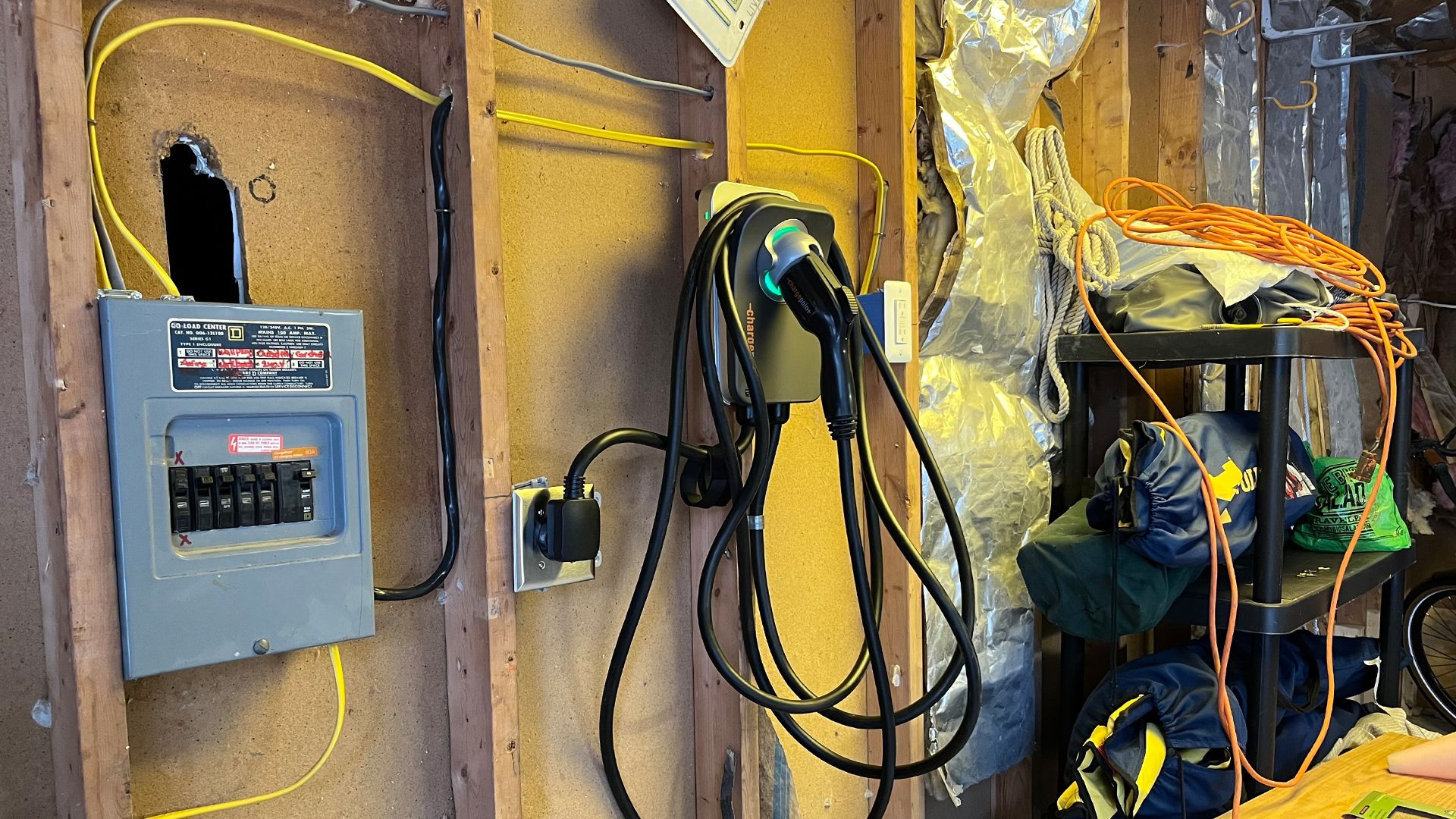
Most Level 2 EV chargers require a 240-volt circuit and a dedicated breaker.
They typically draw between 30 to 50 amps, depending on the charger type.
This means your electrical panel must have enough available capacity to handle the additional load.
How to Check If Can Your Panel Handle EV Charger
To determine if your panel can support an EV charger, you need to check:
- Total panel capacity (usually 100 amp or 200 amp)
- Available breaker space
- Current electricity usage in your home
If your panel is already near its limit, adding an EV charger may overload the system.
100 Amp vs 200 Amp Panel

Homes with 100 amp panels may struggle to support EV chargers along with other appliances.
A 200 amp panel is generally recommended for EV charging because it provides enough capacity for modern energy needs.
Upgrading to a 200 amp panel ensures better performance and safety.
Signs Your Panel Cannot Handle an EV Charger
If you notice any of these signs, your panel may need an upgrade:
- Frequent breaker trips
- Flickering lights when appliances run
- No available breaker slots
- Older or outdated electrical panel
These issues indicate that your system may not safely support an EV charger.
When You Need a Panel Upgrade
You may need an upgrade if your panel lacks capacity or space.
Panel upgrades are common for older homes installing EV chargers.
Upgrading ensures your system can handle both EV charging and daily electricity use.
Alternative Solutions Without Upgrading
In some cases, you may not need a full panel upgrade.
Load management systems can help balance electricity usage.
Smart EV chargers can adjust charging speed based on available power.
However, these solutions depend on your existing panel capacity.
Cost of Upgrading Panel for EV Charger
Upgrading your electrical panel typically costs between $1,500 and $4,500 depending on complexity.
Additional costs may apply if wiring or service upgrades are required.
This investment ensures safe and reliable EV charging at home.
Is Your Panel Ready for EV Charging
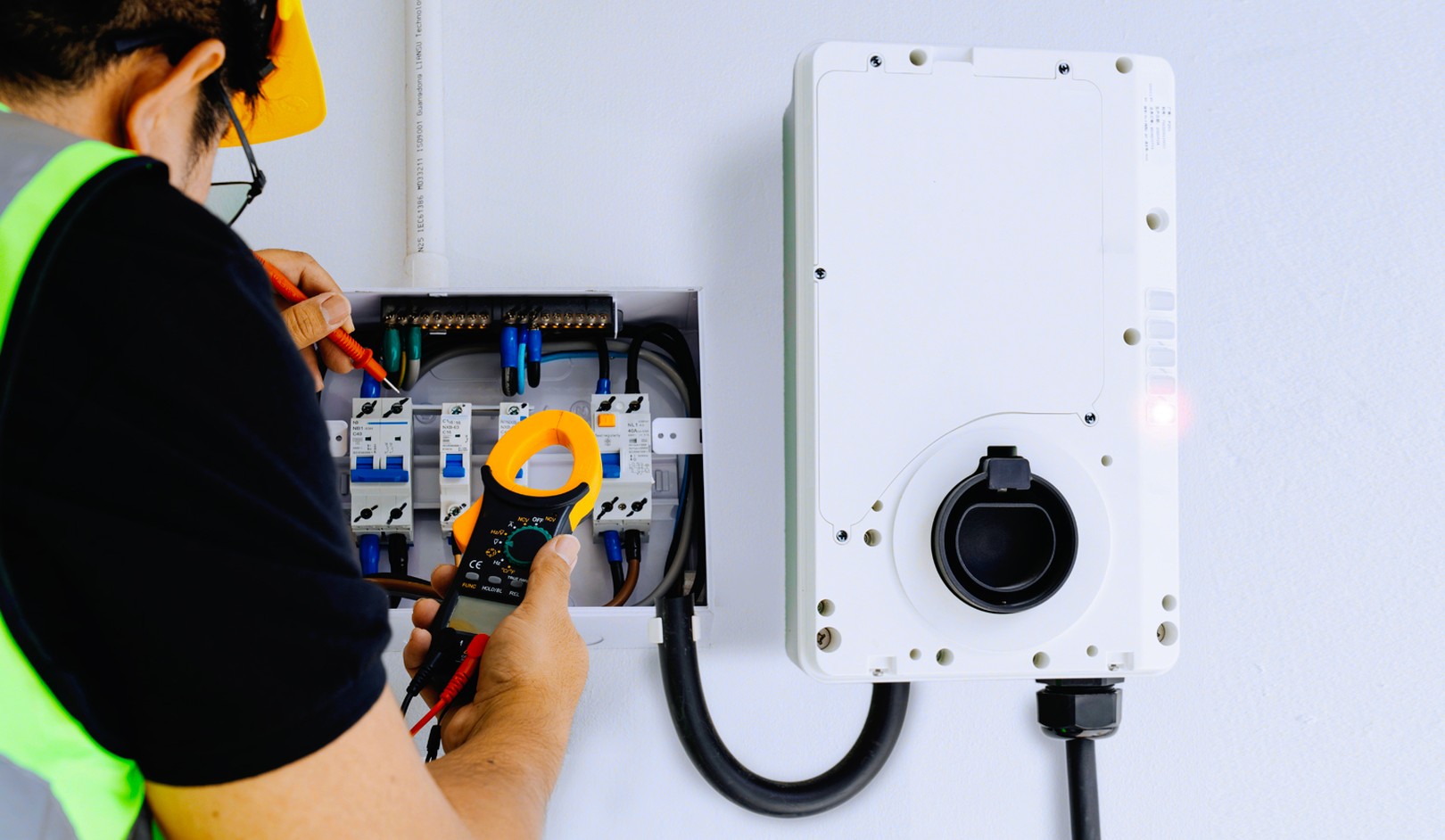
A modern panel with enough capacity can easily support EV charging.
If your system meets the requirements, installation becomes simple and cost-effective.
If not, upgrading your panel prepares your home for future energy needs.
Conclusion
Not every electrical panel can handle an EV charger, especially in older homes.
Checking your panel capacity, available space, and energy usage is the first step.
If needed, upgrading your panel ensures safe, efficient, and future-ready EV charging.
FAQs
Can a 100 amp panel handle an EV charger
In many cases, it may struggle and require an upgrade.
Do I need a 200 amp panel for EV charging
It is recommended for most Level 2 EV chargers.
How do I know if my panel has enough capacity
You need to check load usage and available breaker space.
Is panel upgrade necessary for EV charger
Not always, but it is common in older homes.