
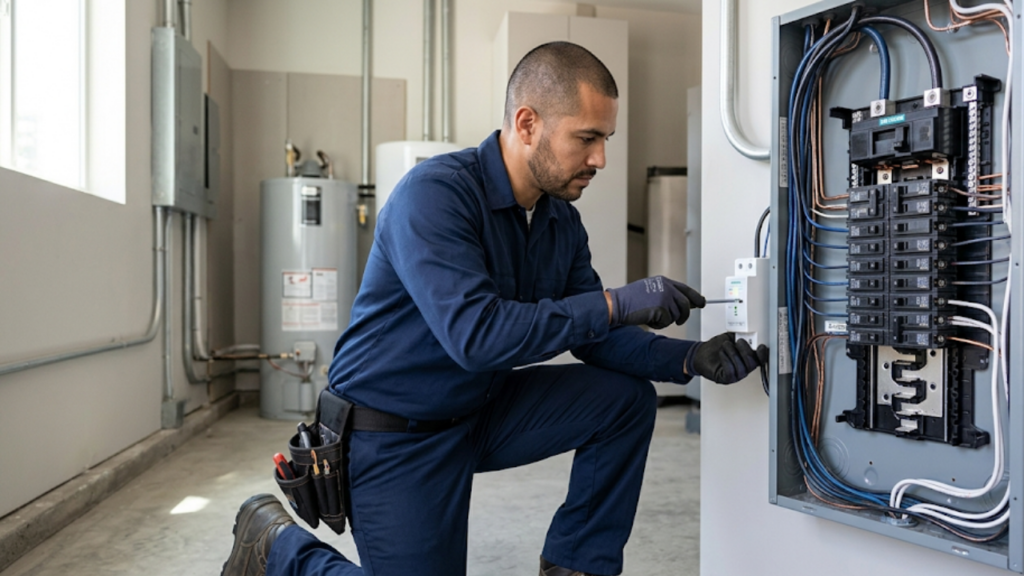
A power surge is a sudden increase in electrical voltage that can damage appliances, electronics, and other electrical equipment in your home. Even a brief surge can affect sensitive devices such as televisions, computers, refrigerators, smart home systems, and HVAC equipment.
But what causes power surges in a house? Common causes include lightning strikes, utility grid switching, faulty electrical wiring, and large appliances cycling on and off. Some surges originate outside your property, while others happen inside your home’s electrical system.
Understanding the causes of power surges can help homeowners recognize warning signs, protect valuable equipment, and determine whether professional electrical inspection or surge protection is needed.
What Is a Power Surge?
A power surge occurs when the voltage supplied to an electrical system rises above its normal operating level for a short period.
Most household electrical equipment is designed to operate within a specified voltage range. When voltage suddenly increases, it can place stress on internal electronic components, damage circuit boards, shorten equipment life, or cause immediate failure.
Power surges can vary in intensity. Some are minor and go unnoticed, while stronger surges can damage multiple devices connected to your home’s electrical system.
7 Common Causes of Power Surges in a House
1. Lightning Strikes
Lightning is one of the most powerful natural causes of electrical surges.
A direct lightning strike near a home, power line, or electrical installation can introduce extremely high voltage into the electrical system. Even a nearby strike can create electrical disturbances that travel through utility lines or other conductive paths.
Lightning-related surges can damage:
- Televisions and entertainment systems.
- Computers and networking equipment.
- Refrigerators and other appliances.
- HVAC control boards.
- Smart home devices.
Unplugging sensitive electronics during severe storms can reduce exposure, but it is not a complete substitute for properly designed surge protection.
2. Utility Grid Switching
Electrical utilities regularly switch power sources, operate equipment, and perform maintenance to keep electricity flowing.
These normal grid operations can sometimes create temporary voltage disturbances or switching surges. Power restoration after an outage may also involve electrical transients.
These events can affect homes even when there is no obvious problem with the property’s internal wiring.
A properly selected surge protective device can help reduce the impact of certain incoming surges.
3. Large Appliances Turning On and Off
Some household appliances use motors or compressors that draw changing amounts of current when they start or stop.
Common examples include:
- Air conditioners.
- Refrigerators.
- Washing machines.
- Water pumps.
- HVAC equipment.
These switching events can produce small electrical transients within a home’s wiring. Most are relatively minor, but repeated electrical disturbances can contribute to stress on sensitive electronics.
If appliances cause noticeable flickering, unusual noises, or repeated breaker trips, an electrician should inspect the circuit and equipment.
4. Faulty or Damaged Electrical Wiring
Damaged, deteriorated, or improperly connected wiring can create unstable electrical conditions.
Loose connections, damaged insulation, corrosion, and defective electrical components may cause intermittent power problems. A damaged or loose neutral connection can be particularly concerning because it may create abnormal voltage conditions on a residential electrical system.
Warning signs include:
- Lights becoming unusually bright or dim.
- Flickering lights in multiple rooms.
- Burning smells near outlets or electrical panels.
- Buzzing or crackling sounds.
- Appliances behaving unpredictably.
These symptoms should not be ignored. Stop using affected equipment and arrange a professional electrical inspection. If you notice smoke, sparks, or signs of fire, move away and contact emergency services.
5. Downed Power Lines and Electrical Faults
Problems involving utility lines, damaged electrical equipment, or faults in the distribution network can cause voltage disturbances.
Storms, fallen branches, vehicle accidents, and damaged utility equipment can interrupt normal power delivery.
These problems may affect several properties in the surrounding area. If your neighbors are experiencing similar electrical issues, the disturbance may originate from the utility network rather than your home’s wiring.
Contact your utility provider about suspected service-line or grid problems. An electrician can inspect the equipment on the property’s side of the service.
6. Overloaded or Poorly Designed Electrical Circuits
An overloaded circuit does not automatically cause a power surge. However, circuits that are poorly designed, improperly connected, or operating beyond their intended capacity can create electrical safety problems.
Overloading can cause:
- Frequent circuit breaker trips.
- Overheated wiring or connections.
- Voltage drops when equipment operates.
- Unexpected interruptions to appliances.
If multiple high-power appliances are connected to circuits that are not designed for their combined demand, an electrician may recommend circuit changes, dedicated circuits, or an electrical panel evaluation.
7. Faulty Electrical Equipment
A defective appliance, damaged power supply, or failing electrical component can create electrical disturbances inside a home.
For example, an aging motor, damaged electronic power supply, or malfunctioning control board may cause abnormal operation or electrical noise.
If a particular appliance repeatedly causes flickering, unusual sounds, or power interruptions, stop using it until it can be inspected.
What Are the Warning Signs of a Power Surge?
Not every power surge is noticeable, but certain symptoms may indicate electrical disturbances or equipment damage.
Look for these warning signs:
Lights flicker unexpectedly: Brief flickering can occur for several reasons, including electrical load changes, loose connections, or voltage disturbances.
Electronics restart suddenly: Computers, routers, televisions, or other devices may unexpectedly shut down or restart.
Appliances stop working: A damaged power supply or circuit board may prevent an appliance from operating correctly.
Burning smells near outlets: This may indicate overheating or damaged electrical components and requires immediate attention.
Frequent breaker trips: Repeated trips may point to overloads, short circuits, or other electrical faults rather than a power surge alone.
If multiple warning signs occur, have the electrical system inspected instead of assuming the problem is harmless.
How Can You Protect Your House from Power Surges?
Protecting your home involves more than using a basic power strip. A combination of appropriate surge protection, electrical maintenance, and safe equipment use can reduce the risk of damage.
1. Install a Whole-Home Surge Protector
A whole-home surge protective device (SPD) is installed at or near the electrical service equipment, according to the device’s listing and installation requirements.
It helps limit certain transient overvoltages entering the home’s electrical system and can provide protection for multiple connected circuits.
A qualified electrician should evaluate the electrical panel, service configuration, grounding and bonding, and suitable device rating before installation.
2. Use Quality Point-of-Use Surge Protectors
Surge-protective power strips can provide an additional layer of protection for individual electronics.
They are useful for devices such as:
- Desktop computers.
- Televisions.
- Gaming systems.
- Routers and networking equipment.
- Home office electronics.
Choose a properly rated surge protector rather than assuming every power strip provides surge protection. Replace damaged devices and follow the manufacturer’s replacement guidance.
3. Check Your Electrical Panel
An aging, damaged, or improperly installed electrical panel can contribute to electrical problems.
A professional inspection can identify loose connections, signs of overheating, incorrect breaker installations, and other conditions that may affect electrical safety.
If your panel is outdated or unable to support your property’s electrical requirements, an electrician can discuss appropriate repair or upgrade options.
4. Maintain Proper Grounding and Bonding
Grounding and bonding are important parts of a safe electrical installation. They help provide appropriate paths for fault current and support the operation of protective equipment.
However, grounding alone does not prevent every power surge or guarantee that electronics will remain undamaged.
A qualified electrician can inspect the grounding and bonding system and identify problems that may require correction.
5. Protect Sensitive Electronics
During severe thunderstorms, unplugging sensitive electronics when it is safe to do so can reduce their exposure to certain surge paths.
Avoid handling plugs or electrical equipment if the area is wet, if lightning is nearby, or if there are signs of electrical damage.
For permanently connected equipment, properly installed surge protection is an important consideration.
Is a Whole-Home Surge Protector Worth It?
For many homeowners, a whole-home surge protective device is worth considering, particularly when a property contains expensive electronics, modern appliances, HVAC systems, or smart home equipment.
It can help reduce the impact of transient voltage surges entering through the electrical service. However, no surge protector can guarantee protection against every electrical event, including all direct lightning-related damage.
The right protection depends on the property’s electrical system, the equipment being protected, and the type of surge exposure.
An electrician can evaluate whether a whole-home SPD, point-of-use protection, or a coordinated combination of both is appropriate.
When Should You Call an Electrician?
You should arrange professional electrical inspection if you notice repeated power fluctuations, unusual light flickering, burning smells, buzzing outlets, damaged wiring, or appliances failing unexpectedly.
Professional troubleshooting can help determine whether the problem comes from:
- The electrical panel.
- Loose or damaged wiring.
- A neutral connection issue.
- Faulty appliances.
- Utility service disturbances.
- Inadequate surge protection.
Do not open an electrical panel or attempt to repair service wiring yourself. Electrical troubleshooting should be performed by a qualified professional.
Frequently Asked Questions
Can a power surge damage appliances even if they are turned off?
Yes. Some appliances remain connected to electrical power even when switched off. A surge can potentially reach their internal components through connected electrical circuits.
Can a power surge happen without lightning?
Yes. Utility grid switching, electrical equipment operation, and certain faults within a building’s wiring can create voltage transients without a lightning strike.
Does a circuit breaker protect against power surges?
A standard circuit breaker primarily protects wiring against overcurrent conditions, such as overloads and short circuits. It is not a substitute for a surge protective device.
How do I know if my house has a whole-home surge protector?
An electrician can inspect your electrical panel and service equipment to identify whether a surge protective device is installed and assess its condition and suitability.
How often should a surge protector be replaced?
It depends on the device, its condition, and the manufacturer’s instructions. Some surge protective devices have status indicators that show when protection is no longer available. Follow the manufacturer’s guidance and have questionable equipment inspected.
Can an old electrical panel increase the risk of power problems?
An old panel does not automatically cause power surges. However, damaged components, loose connections, outdated equipment, or insufficient capacity can contribute to electrical problems and should be evaluated.
Protect Your Home’s Electrical System with ReVamp Energy
Power surges can damage valuable electronics and appliances, sometimes without obvious warning. Understanding their causes and choosing appropriate protection can help reduce electrical risks and improve the reliability of your home’s electrical system.
ReVamp Energy provides professional residential and commercial electrical services in Los Angeles and throughout Southern California. Our team can help inspect electrical panels, evaluate wiring conditions, and install suitable surge protection solutions for your property.
Concerned about power surges in your home? Contact ReVamp Energy today to schedule your free energy consultation.