
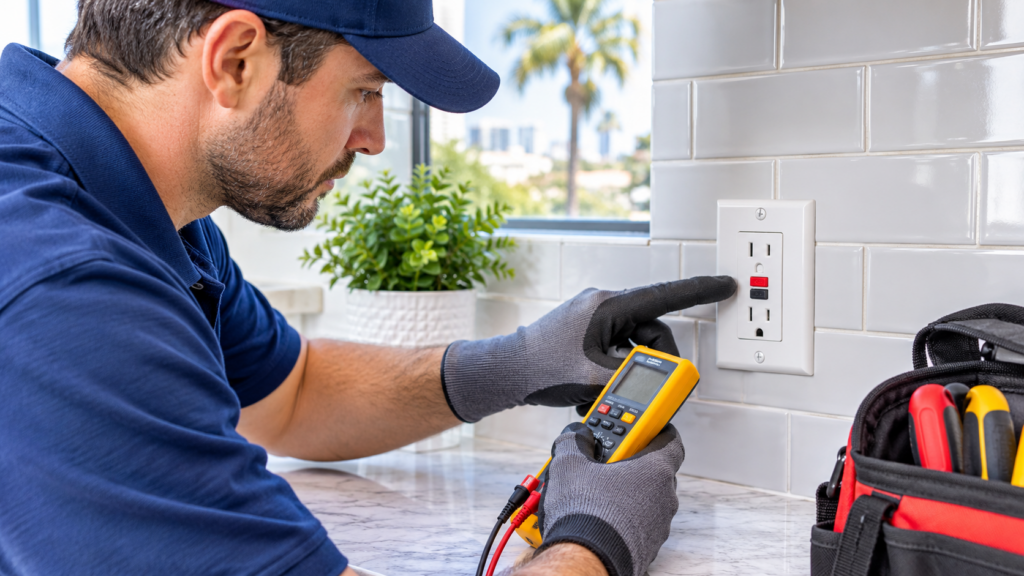
A GFCI outlet that keeps tripping or will not stay reset can be frustrating, especially when it interrupts power in your kitchen, bathroom, garage, or outdoor area. A Ground Fault Circuit Interrupter (GFCI) is designed to protect people from electric shock by detecting differences in electrical current and quickly shutting off power when it senses a possible ground fault.
If your GFCI outlet keeps resetting, trips repeatedly, or immediately switches off after you press the reset button, there may be an electrical issue that needs attention. Understanding the common causes can help you identify when a simple connected-device issue may be involved and when professional electrical troubleshooting is necessary.
What Does It Mean When a GFCI Outlet Keeps Tripping?
A GFCI outlet monitors the electrical current flowing through a circuit. When it detects an imbalance between the current going out and returning, it interrupts power to reduce the risk of electric shock.
This can happen when electricity finds an unintended path to ground, potentially through damaged wiring, a faulty appliance, or moisture.
It is important to understand the difference between two situations:
- GFCI keeps tripping: The outlet repeatedly shuts off power after being reset.
- GFCI will not reset: The reset button does not stay engaged, or the outlet immediately trips again.
Both situations can indicate a fault that should be investigated rather than repeatedly resetting the outlet.
7 Common Reasons Your GFCI Outlet Keeps Tripping
1. Moisture Inside the Outlet
Moisture is one of the common reasons GFCI outlets trip, particularly in bathrooms, kitchens, garages, laundry rooms, and outdoor locations.
Water can enter an outlet through condensation, splashing, rain exposure, or damaged weatherproof covers. Moisture can create an unintended electrical path and cause the GFCI to interrupt power.
If the outlet is wet, do not touch it or attempt to reset it. Keep the area clear and have the condition inspected by a qualified electrician.
2. A Faulty Appliance or Electrical Device
Sometimes the GFCI outlet is working correctly, but a connected appliance has an electrical fault.
Common examples include:
- Refrigerators and freezers.
- Hair dryers and electric grooming devices.
- Washing machines.
- Outdoor power tools.
- Kitchen appliances.
- Extension cords or connected equipment with damaged insulation.
A faulty appliance may cause the GFCI to trip whenever it is plugged in or switched on.
If it is safe to do so, disconnect accessible appliances without touching wet or damaged equipment. If the outlet continues to trip, professional troubleshooting is recommended.
3. Damaged or Loose Electrical Wiring
Damaged wiring, deteriorated insulation, loose connections, or an improperly installed outlet can create electrical faults.
These problems may develop because of aging electrical components, previous installation work, physical damage, or overheating.
Warning signs can include:
- Burning smells.
- Discoloration around the outlet.
- Crackling or buzzing sounds.
- Unusual warmth.
- Repeated unexplained tripping.
If you notice any of these signs, stop using the outlet and arrange an electrical inspection.
4. Too Many Devices on the Circuit
A GFCI outlet does not trip simply because it detects a high number of plugged-in devices. However, an overloaded circuit can cause a circuit breaker to trip.
This distinction matters because a GFCI outlet and a circuit breaker provide different types of protection.
If several high-power appliances operate on the same circuit, the circuit may exceed its capacity. An electrician can check the circuit load, breaker rating, wiring, and connected equipment to identify the problem.
5. A Faulty GFCI Outlet
GFCI outlets can wear out over time. Internal components may become less reliable due to age, frequent use, electrical conditions, or environmental exposure.
A faulty GFCI may trip unexpectedly, fail its built-in test, or refuse to remain reset even when no obvious connected-device problem exists.
If the outlet is old or behaving inconsistently, an electrician can test it and determine whether replacement is necessary.
6. Multiple GFCI Outlets on the Same Circuit
Some electrical installations have multiple outlets protected by a single upstream GFCI device.
For example, a GFCI outlet in one location may protect downstream outlets in another area. A fault at a connected downstream outlet or device can cause the upstream GFCI to trip.
This can make it difficult to identify which location is responsible for the problem.
A professional can trace the circuit and determine which outlets are connected and where the fault is occurring.
7. Outdoor Electrical Problems
Outdoor outlets are exposed to rain, humidity, dirt, temperature changes, and other environmental conditions.
Damaged weatherproof covers, deteriorated wiring, water inside electrical boxes, or faulty outdoor equipment can cause repeated GFCI tripping.
Outdoor GFCI installations should have appropriate weather-resistant protection and covers suitable for their location and use.
What Should You Do When Your GFCI Outlet Will Not Reset?
If your GFCI outlet will not reset, avoid repeatedly pressing the reset button. First, consider whether there are obvious signs of moisture, damage, or an electrical problem.
You can follow these basic safety precautions:
- Stop using the affected outlet.
- If it is safe and dry to do so, unplug accessible connected devices.
- Look for visible signs of moisture or damage without removing the outlet cover.
- Do not touch the outlet if it is wet, hot, sparking, or damaged.
- If the problem continues, contact a qualified electrician for inspection.
Never remove the outlet from the wall, touch exposed wiring, bypass GFCI protection, or replace electrical components without the appropriate qualifications.
When Should You Replace a GFCI Outlet?
A GFCI outlet may need replacement if it is damaged, worn out, fails its built-in test, or cannot maintain its reset position after the underlying electrical fault has been addressed.
A qualified electrician can test the device, inspect its wiring, and determine whether replacement is the correct solution.
Simply installing a new outlet without identifying the original cause may not solve the problem. If moisture, damaged wiring, or a faulty connected appliance is responsible, the issue may continue even after replacement.
How Can You Prevent GFCI Outlets from Tripping Repeatedly?
Regular electrical maintenance can help reduce the risk of recurring GFCI problems.
Consider these precautions:
- Keep outlets away from direct water exposure.
- Use appropriate weatherproof covers for outdoor installations.
- Avoid using damaged extension cords and electrical appliances.
- Do not overload electrical circuits.
- Test GFCI outlets using their built-in TEST and RESET buttons according to the manufacturer’s instructions.
- Have frequently tripping outlets inspected instead of repeatedly resetting them.
- Arrange professional inspections when outlets show signs of wear or damage.
Testing a GFCI regularly helps confirm that its protective mechanism is functioning, but it does not replace a professional electrical inspection when a problem occurs.
Why Professional Electrical Troubleshooting Matters
Repeated GFCI tripping is not something homeowners should ignore. Although a faulty appliance or worn outlet may be responsible, the same symptoms can also indicate moisture intrusion, damaged wiring, or other electrical faults.
Professional troubleshooting can help identify the actual source of the problem instead of simply replacing the outlet and hoping it works.
An electrician can inspect the GFCI device, test the circuit, examine connected outlets, check wiring conditions, and recommend the appropriate repair.
For homes and businesses in Los Angeles and Southern California, addressing electrical problems early can help improve safety and prevent recurring power interruptions.
Frequently Asked Questions
Why does my GFCI outlet trip immediately after I reset it?
An immediate trip can indicate an active ground fault, moisture, a faulty connected appliance, damaged wiring, or a defective GFCI outlet. The circuit should be inspected rather than repeatedly reset.
Can a bad appliance cause a GFCI outlet to trip?
Yes. An appliance with damaged insulation or an internal electrical fault can create a ground fault that causes the GFCI to interrupt power.
How do I know if my GFCI outlet is bad?
A GFCI may be faulty if it fails its built-in test, trips unexpectedly, shows physical damage, or will not reset after the underlying circuit issue has been addressed. An electrician can test it and confirm whether replacement is needed.
Why does my bathroom GFCI outlet keep tripping?
Bathroom GFCI outlets can trip because of moisture, faulty hair dryers or other appliances, damaged wiring, or problems with downstream outlets. Repeated tripping should be investigated.
Is it safe to keep resetting a GFCI outlet?
No. Repeatedly resetting an outlet without identifying the cause can leave an electrical fault unresolved. Stop using the affected outlet and arrange an inspection if the problem continues.
Does a GFCI outlet protect the entire house?
No. A GFCI outlet protects its own receptacle and, depending on how it is wired, certain downstream outlets. It does not automatically provide GFCI protection to every electrical outlet in the property.
Get Professional Electrical Help from ReVamp Energy
A GFCI outlet that keeps tripping may be warning you about a problem with an appliance, wiring, moisture exposure, or the outlet itself. Identifying the cause is essential for restoring reliable power and maintaining electrical safety.
ReVamp Energy provides professional residential and commercial electrical services in Los Angeles and throughout Southern California. Our team can help inspect electrical outlets, troubleshoot circuit problems, and recommend appropriate electrical repairs.
Experiencing repeated GFCI problems? Contact ReVamp Energy today to schedule your electrical service consultation.