
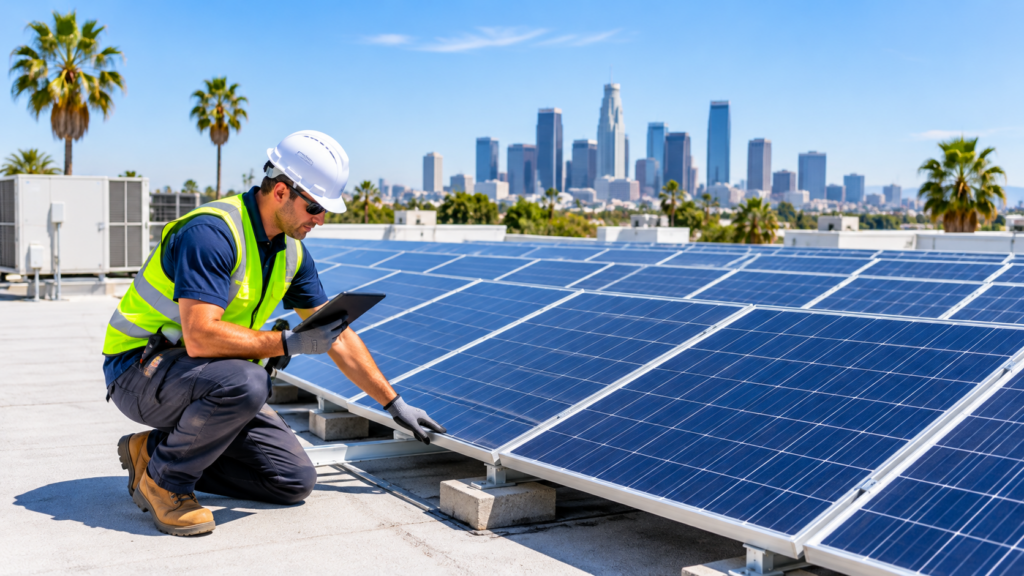
Yes, solar panels can be installed on a flat roof. In fact, flat roofs can be an excellent option for residential and commercial solar installations because they offer flexibility in panel placement, mounting angles, and system layout. However, a successful installation requires more than simply placing panels on the roof. The roof structure, mounting system, drainage, wind exposure, and available space must all be evaluated before installation.
For property owners in Los Angeles and Southern California, a properly designed flat-roof solar system can help reduce electricity costs and make better use of available roof space. The right design depends on the building and its energy needs.
How Are Solar Panels Installed on a Flat Roof?
Unlike sloped roofs, flat roofs do not naturally provide the angle needed for solar panels to capture sunlight efficiently. Installers use specialized mounting structures to position the panels at a suitable tilt and orientation.
There are two common mounting approaches:
1. Ballasted Mounting Systems
A ballasted mounting system holds solar panels in place using carefully calculated weights, such as concrete blocks. In many designs, this avoids drilling through the roof’s waterproofing membrane.
This can be useful when protecting the existing roof surface is a priority. However, the added weight must be checked against the building’s structural capacity. Wind conditions, roof height, and the mounting design also affect how much ballast is required.
2. Mechanically Attached Mounting Systems
Mechanically attached systems secure the solar mounting structure directly to suitable structural elements of the building.
These systems may reduce the amount of additional ballast needed, but they involve roof penetrations. Each penetration must be properly sealed and detailed to protect the roof from water intrusion.
The best mounting option depends on the roof material, structural design, waterproofing condition, and local wind requirements.
What Is the Best Angle for Solar Panels on a Flat Roof?
Solar panels on flat roofs are usually installed at a slight tilt instead of lying completely horizontal. The mounting structure creates the angle needed for sunlight exposure and water runoff.
The ideal angle depends on several factors:
- The property’s location and solar exposure.
- The direction the panels face.
- Nearby buildings, trees, and rooftop equipment.
- Wind exposure and mounting-system limitations.
- The available roof area and desired system size.
A higher tilt is not automatically better. It can increase wind pressure, require more spacing between panel rows, and reduce the total number of panels that fit on the roof. A lower-profile layout may allow more panels while balancing energy production and structural requirements.
A professional solar design should consider the entire roof layout rather than choosing an angle based on a general recommendation.
Can Every Flat Roof Support Solar Panels?
No. A flat roof must be evaluated before solar panels are installed.
The roof needs to support the combined weight of the solar panels, mounting structures, and any ballast. The building must also be able to handle applicable wind and other structural loads.
Important factors include:
Roof condition: Cracks, leaks, damaged waterproofing, or aging roofing materials may need attention before installation.
Structural capacity: The roof structure must be suitable for the proposed solar equipment and mounting system. Older buildings may require additional engineering review.
Water drainage: Solar equipment should not block drains or create areas where rainwater can collect.
Wind exposure: Flat-roof panels can experience wind uplift. The mounting system must be designed for the building’s height, location, and exposure.
Available space: HVAC equipment, vents, skylights, access paths, and other rooftop features can limit the usable installation area.
A roof inspection and appropriate structural evaluation help determine whether the project is suitable.
Does a Flat Roof Need More Space for Solar Panels?
It can. Flat-roof installations may require additional spacing between rows of panels to prevent one row from casting shadows on another.
The amount of spacing depends on panel dimensions, tilt angle, roof orientation, and the sun’s position throughout the year.
Installers also need to account for:
- Rooftop HVAC units and ventilation equipment.
- Drainage outlets and water flow paths.
- Maintenance access and walkways.
- Required safety and fire-access clearances.
- Areas affected by shadows from nearby structures.
A well-planned layout balances the number of panels with accessibility, safety, and long-term performance.
What Are the Benefits of Installing Solar Panels on a Flat Roof?
Flat roofs offer several advantages for solar projects.
Flexible panel placement: Mounting structures allow installers to select a suitable panel direction and tilt instead of relying entirely on the roof’s existing slope.
Useful space for commercial solar: Large commercial and industrial buildings often have substantial roof areas that can accommodate solar arrays.
Easier layout adjustments: Equipment locations and roof features can be considered while planning the panel arrangement.
Potential protection of roof waterproofing: Certain ballasted mounting systems can avoid roof penetrations, provided the roof and mounting design are suitable.
Reduced electricity expenses: A properly sized solar system can offset a portion of the property’s electricity consumption and help manage long-term energy costs.
Actual savings depend on system size, electricity usage, utility rates, shading, and the property’s energy profile.
What Problems Should You Consider Before Installation?
Flat-roof solar systems require careful planning to avoid problems after installation.
Roof Leaks and Waterproofing
Incorrectly sealed mounting penetrations can create water-entry points. Even non-penetrating systems need compatible protective layers to prevent damage to the roofing membrane.
Excessive Roof Weight
Ballasted systems add weight to the roof. Installing a system without checking structural capacity can create serious problems.
Water Drainage Issues
Mounting equipment must not obstruct drainage paths. Poor planning can contribute to water accumulation and roof damage.
Shading and Lower Energy Production
Nearby buildings, rooftop equipment, and incorrectly spaced panel rows can reduce sunlight exposure. A shading assessment helps determine the most effective layout.
Future Roof Repairs
Solar panels may need to be temporarily removed if the roof requires major repairs or replacement. Planning for roof maintenance before installation can help avoid unnecessary future costs.
Is Flat-Roof Solar Suitable for Commercial Buildings?
Yes. Flat roofs are common on offices, warehouses, retail buildings, and industrial properties, making them worth evaluating for commercial solar installations.
A commercial solar project should begin with an assessment of electricity consumption, usable roof area, structural capacity, and operating requirements.
For example, a warehouse may have a large roof but also contain HVAC equipment, skylights, and access routes that affect the usable solar area. The final system design should account for these limitations.
Businesses should also consider whether their daytime electricity consumption aligns with the expected solar production. This can help determine how much of the generated electricity may be used on-site.
How Much Does Flat-Roof Solar Installation Cost?
The cost depends on more than the number of solar panels.
Important cost factors include:
- Total system capacity and panel selection.
- Mounting structure and installation complexity.
- Ballast requirements or structural attachments.
- Roof condition and waterproofing work.
- Electrical equipment and wiring.
- Permits, engineering, and inspection requirements.
- Access to the roof and installation conditions.
A flat roof that requires structural reinforcement or extensive waterproofing work may cost more to prepare. The most accurate estimate comes from evaluating the property and designing a system around its actual requirements.
Frequently Asked Questions
Can solar panels be installed without drilling into a flat roof?
Yes. Some ballasted mounting systems use calculated weights instead of roof penetrations. However, they add weight and must be checked for structural capacity and wind resistance.
Do flat-roof solar panels produce less electricity?
Not necessarily. A properly designed system can produce substantial electricity. Performance depends on panel orientation, tilt, shading, system design, and local sunlight conditions.
Can solar panels be installed on a flat concrete roof?
Yes, a concrete roof can be suitable, but its condition, structural capacity, waterproofing, and mounting requirements should be evaluated before installation.
Do flat-roof solar panels need regular maintenance?
Yes. Panels should be inspected and cleaned as needed. The mounting system, electrical connections, drainage paths, and roof condition should also be checked periodically.
Is a flat roof suitable for commercial solar panels?
Yes. Large commercial flat roofs can offer useful installation space, but the building’s structural capacity, roof layout, energy consumption, and access requirements must be considered.
Plan Your Flat-Roof Solar Installation with ReVamp Energy
A flat roof can be a practical location for solar panels when the system is designed around the building’s structure, roof condition, and electricity requirements.
ReVamp Energy provides solar system design and installation services for residential and commercial properties in Los Angeles and Southern California. Our team can help evaluate your roof, review installation requirements, and plan a solar solution suited to your property.
Ready to explore solar for your flat roof? Get Your Free Energy Consultation with ReVamp Energy.