
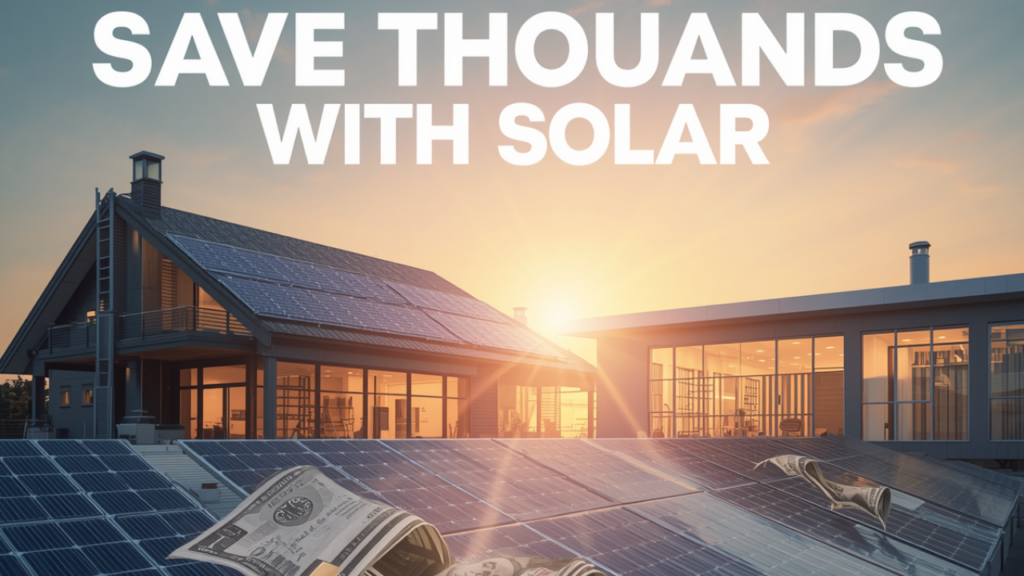
Top Benefits of Solar Energy for Homes & Businesses
Table of Contents
Introduction
Solar energy is no longer just a trend—it has become one of the smartest long-term investments for homeowners and businesses.
With rising electricity prices, increasing power outages, and growing demand for energy independence, more properties are switching to solar every year.
But here’s what many people still underestimate:
Solar is not just about “saving electricity.”
It changes how a property consumes, manages, and controls energy.
From reducing utility bills to increasing property value, the benefits of solar energy go far beyond what most people expect.
1. Lower Electricity Bills
This is the biggest reason most people install solar.
Solar panels generate electricity from sunlight, reducing the amount of power you need from the utility company.
For many homes and businesses, this can lead to:
- Significant monthly savings
- Reduced dependence on rising utility rates
- Better long-term financial stability
In areas with high electricity costs, the savings become even more noticeable over time.
2. Protection From Rising Energy Costs
Electricity prices continue to increase almost every year.
Without solar:
- You remain dependent on utility rate hikes
- Monthly costs become unpredictable
With solar:
- You generate your own power
- Energy costs become more stable and manageable
This long-term protection is one of the biggest hidden advantages of solar energy.
3. Energy Independence
Solar gives homeowners and businesses more control over their energy usage.
Instead of relying entirely on the grid, solar systems allow you to produce electricity directly on your property.
When combined with battery storage, solar can also provide backup power during outages.
This is becoming increasingly important in areas experiencing grid instability and high energy demand.
4. Long-Term Return on Investment
Solar systems are designed to operate for decades.
While installation requires upfront investment, long-term savings often outweigh the initial cost.
Over time, many property owners recover installation costs through:
- Reduced electricity bills
- Tax incentives
- Increased property value
For businesses, solar can also improve operational efficiency and reduce overhead costs.
5. Increased Property Value
Properties with solar systems are often more attractive to buyers because they offer:
- Lower operating costs
- Modern energy infrastructure
- Long-term savings potential
For businesses, solar can also improve brand image and demonstrate commitment to sustainability.
6. Lower Maintenance Than Most People Expect
One of the biggest misconceptions about solar is that it requires constant maintenance.
In reality, solar systems typically require:
- Minimal servicing
- Occasional cleaning
- Periodic inspections
Most modern systems are highly reliable and designed for long-term performance.
7. Better for the Environment
Solar energy is a clean renewable energy source.
Unlike traditional power generation, solar reduces:
- Carbon emissions
- Fossil fuel dependence
- Environmental impact
This makes solar an important part of long-term sustainability efforts for both homes and businesses.
8. Solar Works for Both Homes and Businesses
Residential Benefits
Homeowners use solar to:
- Reduce monthly bills
- Add battery backup
- Power EV chargers
- Increase home efficiency
Commercial Benefits
Businesses use solar to:
- Lower operational expenses
- Offset large energy consumption
- Improve energy reliability
- Reduce long-term utility dependence
Commercial buildings with high daytime energy usage often benefit significantly from solar systems.
9. Battery Storage Makes Solar Even More Powerful
Modern solar systems are often paired with battery storage.
This allows properties to:
- Store excess solar energy
- Use power during outages
- Reduce peak electricity costs
Battery systems make solar more flexible and reliable than ever before.
10. Supports EV Charging and Electrification
As more homes and businesses adopt electric vehicles, energy demand increases rapidly.
Solar helps offset the electricity required for:
- Home EV charging
- Fleet charging systems
- Electrified appliances and HVAC systems
This creates a more complete and efficient energy ecosystem.
Common Misconceptions About Solar
“Solar Doesn’t Work on Cloudy Days”
Solar panels still generate electricity even in less-than-perfect conditions.
“Solar Is Too Expensive”
Long-term savings often outweigh upfront costs, especially with incentives and financing options.
“Solar Requires Constant Maintenance”
Most systems require very little ongoing maintenance.
Why Homeowners & Businesses Choose ReVamp Energy Solutions
At ReVamp Energy Solutions, we help property owners build smarter, more efficient energy systems designed for long-term performance.
We focus on:
- Customized solar planning
- Energy optimization
- Future-ready electrical infrastructure
- Honest recommendations
Our goal is not just installing panels—it’s creating complete energy solutions.
Our Solar & Electrical Services
- Residential solar installation
- Commercial solar systems
- Battery backup installation
- EV charger integration
- Electrical panel upgrades
- Energy efficiency planning
What Makes ReVamp Different
- Customized energy solutions
- Expertise in solar + electrical systems
- Focus on long-term savings
- Clean professional installation
- Future-ready system design
We help homeowners and businesses maximize solar performance while preparing for future energy needs.
Conclusion
The benefits of solar energy for homes and businesses go far beyond lower utility bills.
Solar provides:
- Long-term savings
- Energy independence
- Increased property value
- Better energy reliability
- Cleaner power generation
As energy costs continue rising, solar is becoming one of the smartest investments for modern properties.
FAQs
Is solar worth it for businesses
Yes, especially for properties with high daytime electricity usage.
Can solar power an entire home
Yes, depending on system size and energy usage.
Do solar panels work during outages
Only if paired with battery backup systems.
How long do solar systems last
Most systems are designed to operate for decades.