
Table of Contents
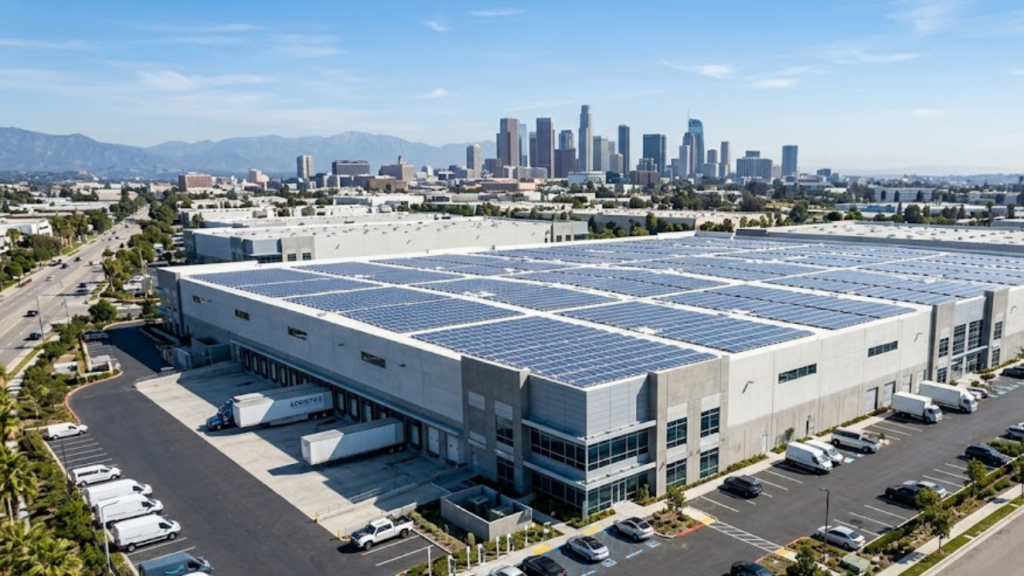
Commercial Solar Cost is one of the most important considerations for Los Angeles business owners looking to reduce electricity expenses and improve long-term operating efficiency. From office buildings and retail stores to warehouses and manufacturing facilities, commercial properties often consume substantial amounts of electricity throughout the year.
Installing a commercial solar energy system can help businesses generate their own electricity, reduce dependence on utility providers, and potentially achieve significant long-term savings. However, the financial benefits depend on several factors, including system size, electricity consumption, utility rates, installation expenses, and available financial incentives.
Understanding these factors helps business owners determine whether commercial solar is a worthwhile investment and how long it might take to recover the initial cost.
How Much Does Commercial Solar Cost in Los Angeles?
Commercial solar installation costs vary according to the property’s electricity requirements, available roof space, equipment selection, electrical infrastructure, and project complexity.
For preliminary budgeting, a commercial system might be evaluated using an illustrative installed cost range of $2.00–$3.50 per watt before incentives. Actual pricing can vary considerably, so businesses should obtain a customized installation proposal before making investment decisions.
| System Size | Illustrative Installation Cost |
|---|---|
| 25 kW | $50,000–$87,500 |
| 50 kW | $100,000–$175,000 |
| 100 kW | $200,000–$350,000 |
| 250 kW | $500,000–$875,000 |
These figures are preliminary estimates, not verified quotes for a specific Los Angeles property. They exclude battery storage and may not account for roof repairs, electrical upgrades, financing costs, or other project-specific expenses.
A professional assessment can help determine the appropriate system size based on actual electricity consumption and the property’s installation conditions.
What Factors Affect Commercial Solar Installation Cost?
1. System Size and Energy Consumption
The size of a commercial solar system directly influences the initial investment. Businesses with high electricity consumption may require larger systems to offset a meaningful portion of their energy usage.
However, installing a larger system does not automatically produce a better financial return. The system should be designed around the property’s electricity demand, operating hours, available roof space, and utility billing structure.
2. Roof Condition and Available Space
Commercial buildings often have large rooftops that can accommodate solar panels. Before installation, contractors must evaluate roof condition, structural capacity, shading, and available space.
If a roof requires repairs or replacement, addressing those issues before installing solar panels can help prevent additional expenses later.
3. Electrical Infrastructure
Some commercial properties require electrical panel upgrades, switchgear modifications, wiring improvements, or additional engineering work before a solar system can be connected.
These requirements can increase the project’s total cost. Businesses should ensure that installation proposals clearly identify expected electrical work, permitting, inspections, and utility interconnection expenses.
4. Battery Storage Requirements
Battery storage allows businesses to store some of their solar generation for later use. Depending on the property’s energy usage and utility rate structure, batteries may help manage peak electricity costs or provide backup power when configured appropriately.
However, batteries add to the initial investment. Businesses should compare solar-only and solar-plus-storage options to determine whether the additional expense makes financial sense.
How Commercial Solar ROI Works for LA Businesses
Commercial solar ROI measures the financial benefits a business receives relative to its investment.
The primary financial benefit is generally the reduction in electricity costs. Other considerations may include eligible tax benefits, operating expenses, financing costs, and the value of electricity exported to the grid.
Three important measurements help businesses evaluate a solar project:
- Annual electricity savings: The estimated reduction in utility expenses after accounting for remaining electricity charges.
- Payback period: The estimated time required for cumulative financial benefits to recover the initial net investment.
- Long-term ROI: The financial return over a defined period after accounting for relevant costs and benefits.
Example of Commercial Solar Savings
Consider a Los Angeles business investing $200,000 in a commercial solar system.
Suppose the system generates estimated annual electricity savings of $40,000, with annual maintenance expenses of $2,000.
The estimated annual net savings would be $38,000.
Simple payback calculation:
Initial investment ÷ annual net savings
$200,000 ÷ $38,000 = approximately 5.3 years.
This is a hypothetical example, not a prediction for every commercial property. Actual savings depend on solar production, utility rates, electricity consumption, system performance, and applicable charges. The calculation also excludes financing costs, taxes, degradation, and future changes in electricity prices.
Why Los Angeles Businesses Should Evaluate Their Electricity Rates
Electricity rates can significantly influence the financial performance of commercial solar systems.
Businesses should evaluate their current utility bills, demand charges, time-of-use pricing, and the rules governing compensation for electricity exported to the grid.
Properties that consume substantial electricity during solar production hours may benefit from using more of their generated electricity directly. Businesses with different operating schedules may need a more detailed analysis of their energy usage to determine the best system configuration.
Before installation, reviewing at least 12 months of electricity bills can help establish a more reliable baseline for estimating potential savings.
Commercial Solar Incentives and Tax Considerations
Financial incentives may affect the effective cost of a commercial solar project. However, eligibility depends on the business, project ownership, installation timing, applicable law, and specific program requirements.
Businesses should not assume that every solar installation qualifies for a particular federal tax credit or California incentive. Federal clean-energy tax provisions and eligibility rules have changed, so current requirements should be verified before including incentives in an ROI calculation.
A qualified tax professional can help determine which benefits, if any, apply to the project. Any incentive should be included in financial projections only after its eligibility and value have been appropriately assessed.
How to Improve Commercial Solar ROI
Los Angeles businesses can take several steps to evaluate and improve the financial performance of a solar installation.
Analyze Electricity Usage Before Choosing a System
Review electricity bills and operating schedules before deciding on system size. A system that matches the property’s actual demand can offer better financial results than one selected solely on the basis of available roof space.
Compare Multiple Installation Proposals
Evaluate proposals based on equipment quality, expected production, installation scope, warranties, electrical upgrades, and total project cost.
The lowest installation price is not always the best value if the proposed system has lower expected production or excludes essential project work.
Consider Roof Repairs and Future Expansion
Businesses planning roof replacement, building expansion, or equipment upgrades should coordinate these projects with their solar installation plans.
Planning ahead can reduce avoidable costs and help ensure that the solar system remains suitable for the property’s long-term needs.
Evaluate Financing Options Carefully
Purchasing a system, financing it through a loan, or entering into a third-party ownership arrangement can produce different financial outcomes.
Compare upfront expenses, monthly payments, ownership responsibilities, maintenance obligations, and long-term savings before selecting a financing structure.
Why Professional Commercial Solar Design Matters
Commercial solar projects require more than installing panels on a rooftop. Proper system design involves evaluating electricity consumption, roof conditions, electrical infrastructure, utility requirements, and expected energy production.
ReVamp Energy provides commercial solar design and installation services for businesses in Los Angeles and Southern California. A property-specific assessment can help identify suitable system options and establish more realistic expectations for installation costs and potential electricity savings.
Rather than relying on generic savings estimates, businesses should evaluate their actual energy usage and project requirements before committing to an installation.
Conclusion
Commercial Solar Cost should be evaluated alongside expected electricity savings, installation requirements, financing, and long-term operating expenses. For Los Angeles businesses, the right commercial solar system can offer an opportunity to reduce utility expenses and improve long-term energy planning.
The most reliable way to evaluate a project’s financial potential is to review electricity bills, compare installation proposals, understand applicable utility rules, and calculate the expected payback period using realistic assumptions.
Ready to explore commercial solar for your business? Contact ReVamp Energy to discuss your property’s energy requirements and request a commercial solar assessment.