
Introduction
Installing EV charging stations can be a valuable addition to a commercial property. Businesses can use charging stations for company vehicles, employee charging, customer convenience, or commercial EV fleets. However, installing a charger is only the beginning.
Like other electrical equipment, EV charging stations require proper care and maintenance to remain safe, reliable, and ready for daily use.
EV Charging Station Maintenance helps business owners identify potential problems before they cause unexpected downtime. Regular inspections can also help protect charging equipment, maintain reliable charging performance, and extend the useful life of the system.
Whether your business operates one charging station or a larger commercial charging network, having a maintenance plan can make managing EV infrastructure much easier.
Why EV Charging Station Maintenance Matters
Commercial EV chargers may be used many times every day. Frequent use exposes charging equipment to electrical, mechanical, and environmental wear.
Without regular maintenance, businesses may experience:
- Charging interruptions
- Slow charging performance
- Damaged cables
- Connector problems
- Electrical faults
- Communication issues
- Unexpected equipment downtime
A proactive EV Charging Station Maintenance program helps businesses address these issues before they become larger problems.
How Often Should EV Chargers Be Maintained?
There is no single maintenance schedule that applies to every charging station.
The appropriate schedule depends on:
- Charger type
- Number of daily charging sessions
- Indoor or outdoor installation
- Weather exposure
- Commercial operating hours
- Equipment manufacturer requirements
- Age of the charging equipment
A busy commercial charging station may require more frequent inspections than a charger used only occasionally.
Businesses should follow the equipment manufacturer’s maintenance recommendations and have qualified professionals evaluate the installation when needed.
What Is Included in EV Charging Station Maintenance?
A professional maintenance inspection can involve several different components.
Visual Inspection
The charger enclosure, display, cables, connectors, and surrounding installation should be inspected for visible damage.
Technicians may look for:
- Cracked housings
- Damaged cables
- Loose components
- Signs of overheating
- Corrosion
- Water intrusion
- Physical impact damage
Identifying visible problems early can help prevent further equipment damage.
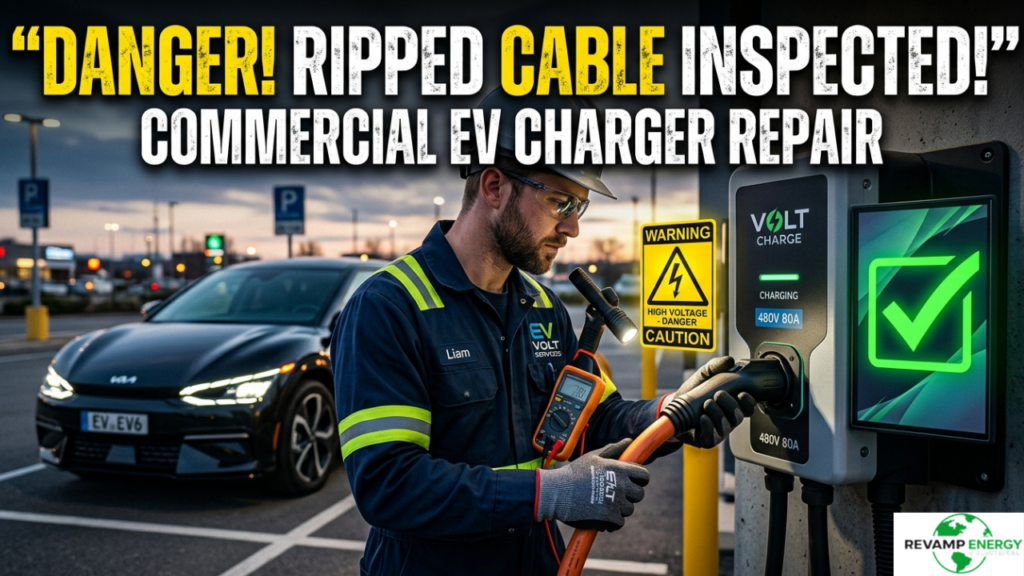
Inspecting EV Charging Cables
Charging cables experience frequent handling, particularly at commercial properties where multiple drivers use the same equipment.
Technicians should check cables for:
- Cuts
- Fraying
- Cracks
- Excessive wear
- Connector damage
A damaged charging cable should not be ignored because it can create safety and performance concerns.
Checking Charging Connectors
The connector is one of the most frequently handled parts of an EV charging station.
Dirt, moisture, physical damage, or excessive wear can interfere with proper charging.
Regular inspection helps ensure that the connector remains in good condition and makes reliable contact with the vehicle.
Testing Electrical Connections
Commercial EV chargers are connected to electrical infrastructure capable of handling significant loads.
Maintenance may include checking:
- Electrical connections
- Circuit protection
- Wiring
- Grounding
- Voltage
- Current
- Panel connections
Loose or damaged electrical connections can create performance and safety issues.
Cleaning EV Charging Equipment
Outdoor charging stations are exposed to dust, dirt, rain, sunlight, and other environmental conditions.
Keeping equipment clean can help maintain proper operation.
However, businesses should follow the manufacturer’s cleaning instructions and avoid using cleaning methods that could damage electrical components.
Software and Communication Checks
Modern EV charging stations are more than electrical devices.
Many commercial chargers use software and network connections to provide features such as:
- Usage monitoring
- Payment processing
- Remote diagnostics
- User management
- Charging reports
- Equipment alerts
Maintenance should therefore include checking whether the charger communicates properly with its management system.
Checking Charging Performance
A charger may appear operational while still experiencing performance problems.
A professional inspection can help identify issues such as:
- Unexpectedly slow charging
- Charging interruptions
- Failed charging sessions
- Communication errors
- Inconsistent power delivery
Performance testing can help identify problems before they affect a larger number of users.
Outdoor EV Charger Maintenance
Outdoor charging stations require additional attention because they are exposed to changing weather conditions.
Important considerations include:
- Rain
- Heat
- Dust
- Humidity
- Direct sunlight
- Physical impact
- Water exposure
Proper installation and routine inspection can help protect charging equipment from environmental damage.
Signs Your EV Charging Station Needs Service
Business owners should arrange an inspection if they notice:
- Charger frequently stops during charging
- Charging takes longer than expected
- Error messages appear repeatedly
- Cable or connector damage
- Unusual noises
- Burning smells
- Visible overheating
- Screen or payment system problems
Ignoring recurring problems can result in more extensive equipment issues.
Preventive Maintenance vs Emergency Repairs
Preventive maintenance focuses on identifying potential problems before they cause equipment failure.
Emergency repairs occur after a charger has already stopped functioning or developed a serious issue.
For businesses, preventive maintenance can be particularly valuable because unexpected charger downtime can affect:
- Employees
- Customers
- Fleet operations
- Revenue
- Business reputation
Regular service can help reduce the likelihood of unexpected interruptions.
Maintaining Multiple Commercial EV Chargers
Businesses operating several charging stations have additional maintenance considerations.
A commercial charging network may include:
- Multiple charging units
- Dedicated electrical panels
- Load management equipment
- Network communication systems
- Payment systems
- Cable management equipment
A maintenance plan should consider the entire charging infrastructure rather than focusing only on individual chargers.
EV Charging Station Maintenance for Fleets
Fleet operators depend heavily on charging availability.
If several vehicles need to charge every day, even a short equipment failure can disrupt operations.
Fleet charging maintenance should focus on:
- Charger availability
- Charging speed
- Cable condition
- Electrical capacity
- Network connectivity
- Load management
- Overall system reliability
Regular inspections can help keep charging infrastructure ready for daily fleet operations.
How Maintenance Can Extend Charger Life
Proper maintenance can help identify small issues before they cause significant damage.
For example, detecting a damaged cable, loose connection, or overheating component early may allow the problem to be addressed before it affects other parts of the system.
Keeping equipment clean and following manufacturer recommendations can also contribute to reliable long-term operation.
Common EV Charging Maintenance Mistakes
Waiting Until the Charger Stops Working
A charger that has completely failed can create unnecessary disruption. Regular inspections are better than relying only on emergency repairs.
Ignoring Damaged Cables
Even minor cable damage should be taken seriously.
Forgetting About the Electrical Panel
The charger is only one part of the overall charging system. The electrical infrastructure supplying it also requires attention.
Ignoring Software Problems
Network-connected chargers can experience communication and software issues that affect functionality.
Skipping Professional Inspections
Commercial charging infrastructure involves electrical equipment that should be inspected and serviced appropriately by qualified professionals.
Planning for Future EV Charging Growth
Businesses should consider future charging requirements when maintaining existing infrastructure.
For example, a company may eventually need to add:
- More charging stations
- Higher-powered chargers
- Fleet charging
- Solar integration
- Battery storage
- Load management
Regular electrical evaluations can help determine whether the existing infrastructure can support future expansion.
Why Businesses Choose ReVamp Energy Solutions
At ReVamp Energy Solutions, we help businesses maintain and improve their commercial EV charging infrastructure.
Our services include:
- EV charger installation
- EV charger maintenance
- EV charger troubleshooting
- Commercial electrical upgrades
- Electrical panel upgrades
- Solar installation
- Battery storage
- Commercial energy solutions
We help businesses keep their charging infrastructure reliable while preparing their electrical systems for future EV growth.
Conclusion
EV Charging Station Maintenance is an important part of operating reliable commercial charging infrastructure.
Regular inspections, equipment cleaning, cable checks, electrical testing, performance monitoring, and timely repairs can help businesses avoid unnecessary downtime and keep their charging stations operating properly.
Whether you manage a workplace charger, customer charging station, or commercial EV fleet, a proactive maintenance strategy can protect your investment and support reliable daily operations.
As EV adoption continues to grow, maintaining your charging infrastructure will become just as important as installing it.
FAQs
How often should commercial EV charging stations be maintained?
The maintenance frequency depends on charger usage, installation conditions, equipment type, and manufacturer recommendations. High-use commercial charging stations may require more frequent inspections.
What does EV Charging Station Maintenance include?
Maintenance can include visual inspections, cable and connector checks, electrical testing, cleaning, performance testing, and software or network checks.
Can damaged EV charging cables be repaired?
Depending on the equipment and type of damage, a qualified technician may be able to repair or replace the affected component. Damaged charging equipment should be evaluated before continued use.
Why do commercial EV chargers stop working?
Potential causes include electrical problems, damaged cables, connector issues, software or communication failures, overheating, or equipment faults.
Can maintenance help extend the life of an EV charger?
Regular inspection and timely service can help identify problems early and support reliable long-term operation.
How can ReVamp Energy Solutions help?
ReVamp Energy Solutions provides commercial EV charger installation, maintenance, troubleshooting, electrical upgrades, solar installation, and battery storage solutions for businesses.