
Introduction
Energy storage is becoming an important part of modern commercial electrical systems. Businesses are using batteries to store electricity, manage peak demand, improve energy efficiency, and provide backup power when needed.
However, choosing the right battery size is not as simple as selecting the largest battery available. A battery that is too small may not provide enough energy for your business, while an unnecessarily large system can increase the initial investment without providing enough additional value.
For commercial property owners, the right Commercial Battery Storage system should be based on how the building uses electricity, when energy demand is highest, whether solar is installed, and how much backup power the business actually needs.
This guide explains the factors that determine battery size and what businesses should consider before installing an energy storage system.
What Is Commercial Battery Storage?
Commercial Battery Storage allows businesses to store electrical energy and use it later.
A battery system can charge when electricity is available and discharge when the building needs additional power.
Commercial batteries can be used for several purposes, including:
- Reducing peak electricity demand
- Storing excess solar energy
- Providing backup power
- Improving energy management
- Supporting EV charging
- Increasing energy flexibility
The battery becomes another part of the property’s electrical infrastructure rather than simply an emergency backup device.
Why Battery Size Matters
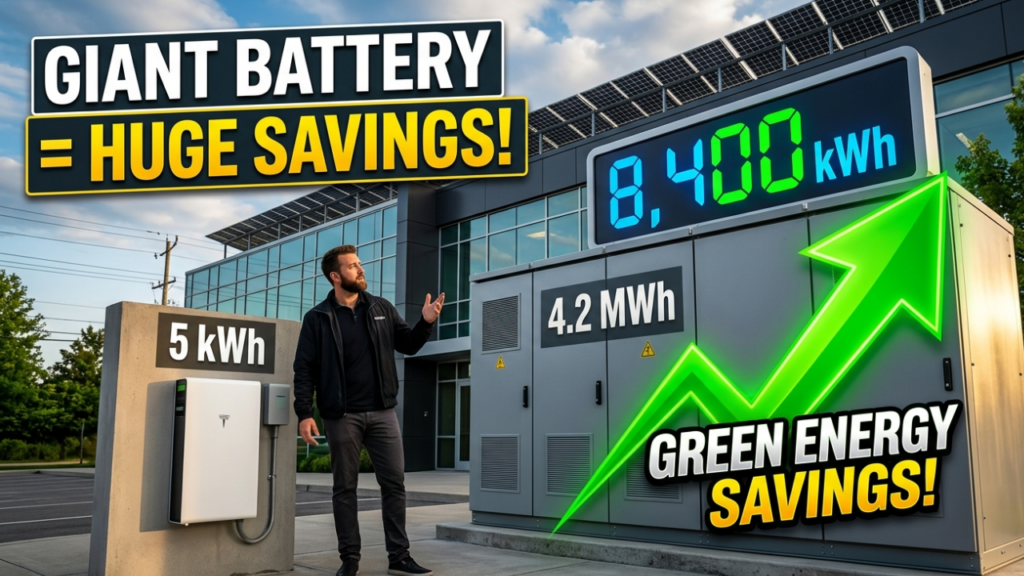
Battery size directly affects how much energy your business can store and how long that stored energy can support your electrical loads.
Two measurements are particularly important:
Energy Capacity
Energy capacity is generally measured in kilowatt-hours (kWh).
It determines how much energy the battery can store.
For example, a battery with a larger kWh capacity can store more energy and potentially operate loads for a longer period.
Power Output
Power output is generally measured in kilowatts (kW).
It determines how much electrical power the battery can provide at one time.
This distinction is important because a battery can have a large energy capacity but still have limitations on how much equipment it can power simultaneously.
How Much Battery Storage Does a Commercial Building Need?
There is no universal battery size for every commercial building.
The appropriate system depends on several factors:
- Average daily electricity consumption
- Peak demand
- Operating hours
- Critical electrical loads
- Solar production
- Desired backup duration
- Available installation space
- Future energy requirements
A professional energy assessment should be completed before selecting equipment.
Start With Your Building’s Energy Usage
The first step is understanding how much electricity your property actually consumes.
Review your utility bills and energy data to identify:
- Monthly electricity consumption
- Daily usage patterns
- Peak demand periods
- Seasonal changes
- Operating schedules
This information provides a starting point for determining whether the battery should primarily be used for energy savings, backup power, or both.
Peak Demand and Battery Storage
One of the most valuable applications of Commercial Battery Storage is reducing peak demand.
Commercial buildings may experience periods when electricity consumption suddenly increases.
For example, several large systems may operate simultaneously:
- HVAC equipment
- Manufacturing equipment
- Refrigeration
- EV chargers
- Pumps
- Commercial kitchen equipment
A battery can potentially discharge during high-demand periods to reduce the amount of electricity drawn from the grid.
This strategy is commonly known as peak demand management.
Battery Storage for Backup Power
Some businesses install batteries primarily for backup power.
In this situation, battery sizing depends on which electrical loads need to remain operational during an outage.
Critical loads may include:
- Security systems
- Emergency lighting
- Computers
- Network equipment
- Refrigeration
- Medical equipment
- Essential business systems
A business does not necessarily need enough battery capacity to operate the entire building.
Instead, a carefully designed system can prioritize critical loads.
How Long Should a Commercial Battery Last During an Outage?
The answer depends on the building’s energy consumption and the amount of battery capacity available.
A battery supporting only essential equipment can potentially provide power for considerably longer than the same battery attempting to operate the entire building.
Businesses should decide whether they need:
- Short-term backup
- Several hours of backup
- Extended backup capability
- Backup combined with solar generation
These requirements significantly affect battery sizing.
Solar and Commercial Battery Storage
Solar panels and batteries work particularly well together.
During periods of high solar production, excess electricity can be stored in the battery instead of being immediately used.
That stored energy can then be used later.
For example:
Solar generation → Building loads → Battery storage → Later energy use
This allows businesses to make better use of the electricity produced by their solar system.
Battery Storage for Businesses With EV Chargers
EV charging can create significant electrical demand, particularly when multiple vehicles are charging simultaneously.
Businesses with workplace charging or commercial EV fleets may use battery storage as part of a broader energy management strategy.
Battery storage can potentially help manage charging demand and reduce pressure on the property’s electrical infrastructure.
This can be particularly useful when a business plans to add additional EV chargers in the future.
Should You Install the Largest Battery Possible?
Not necessarily.
A larger battery provides greater storage capacity, but bigger does not automatically mean better.
Installing excessive storage can increase:
- Equipment costs
- Installation requirements
- Space requirements
- Maintenance considerations
The goal should be to install a battery system that matches the building’s actual energy objectives.
Factors That Affect Battery Size
Building Energy Consumption
Buildings with higher electricity usage may require larger storage systems.
Peak Demand
Businesses with significant demand spikes may benefit from sufficient battery power output to reduce those peaks.
Backup Requirements
The more equipment you want to keep running during an outage, the larger the battery system may need to be.
Solar System Size
If the building has solar panels, battery capacity can be designed around solar production and the property’s energy usage.
Operating Hours
A business operating from early morning until late evening may have different storage requirements from a facility operating only during daytime hours.
Future Expansion
Future EV chargers, equipment, HVAC upgrades, or building expansions should be considered during system design.
A Simple Example
Consider a commercial building that consumes a significant amount of electricity during the day but experiences its highest demand during a few hours in the afternoon.
Instead of purchasing all of its electricity from the grid during those high-demand periods, the business could use stored energy from its battery.
The battery could charge earlier when energy demand is lower or when solar production is high.
It could then discharge during the higher-demand period.
The actual battery capacity and power output would need to be determined from the building’s energy data rather than a simple rule based on building size.
Battery Chemistry and System Design
Commercial energy storage systems can use different battery technologies.
The choice can affect:
- Installation requirements
- Available capacity
- Operating characteristics
- Maintenance
- Expected service life
- Space requirements
A professional installer can help determine which technology and configuration are appropriate for the property.
Where Are Commercial Batteries Installed?
Depending on the system design and property, commercial batteries may be installed in:
- Dedicated equipment areas
- Outdoor enclosures
- Utility areas
- Parking structures
- Solar energy equipment areas
Installation location must account for electrical requirements, ventilation, accessibility, safety, and applicable regulations.
Common Battery Storage Mistakes
Choosing Capacity Based Only on Building Size
Two buildings with the same square footage can have completely different electricity requirements.
Ignoring Peak Demand
Average energy consumption does not tell the entire story. Demand patterns are equally important.
Forgetting About Future EV Charging
Adding several EV chargers later can significantly change the property’s electrical requirements.
Installing a Battery Without Load Analysis
A professional load analysis helps determine what the battery actually needs to accomplish.
Treating the Battery Only as Backup
Battery storage can potentially provide value beyond emergency power through energy management and peak demand reduction.
Why Professional Battery Design Matters
A commercial battery system must work with the property’s existing electrical infrastructure.
Professional planning can evaluate:
- Electrical panels
- Service capacity
- Solar production
- Energy consumption
- Critical loads
- EV charging requirements
- Battery location
- Future expansion
This helps ensure the system is properly sized and integrated.
Why Businesses Choose ReVamp Energy Solutions
At ReVamp Energy Solutions, we help commercial property owners design energy systems around their actual electrical needs.
Our services include:
- Commercial battery storage
- Commercial solar installation
- Electrical upgrades
- EV charger installation
- Energy management solutions
- Electrical load planning
- Solar and battery integration
We help businesses develop energy systems designed for efficiency, reliability, and future growth.
Conclusion
Choosing the right Commercial Battery Storage system requires more than looking at the size of the building.
Energy consumption, peak demand, backup requirements, solar production, EV charging, operating schedules, and future expansion all influence the ideal battery size.
A properly designed system can help businesses store renewable energy, manage electrical demand, improve energy flexibility, and provide backup power for important equipment.
Instead of automatically choosing the largest battery available, businesses should start with an assessment of how they use electricity and what they want the battery to accomplish.
FAQs
What size battery does a commercial building need?
There is no standard battery size. The correct capacity depends on energy consumption, peak demand, backup requirements, solar production, and the building’s operating schedule.
Is a bigger commercial battery always better?
No. A larger battery may provide more capacity but can also increase project costs. The system should be sized according to the property’s actual energy requirements.
Can commercial batteries provide backup power?
Yes. Commercial battery systems can be designed to provide backup power to selected critical loads or, depending on system size, a larger portion of the building.
Can I use battery storage with commercial solar?
Yes. Solar and battery storage can work together to store excess solar energy for later use.
Can battery storage support commercial EV charging?
Yes. Battery storage can be incorporated into an EV charging strategy to help manage electrical demand and support charging infrastructure.
How can ReVamp Energy Solutions help?
ReVamp Energy Solutions provides commercial battery storage, solar installation, EV charging, and electrical upgrades designed around the energy requirements of commercial properties.