
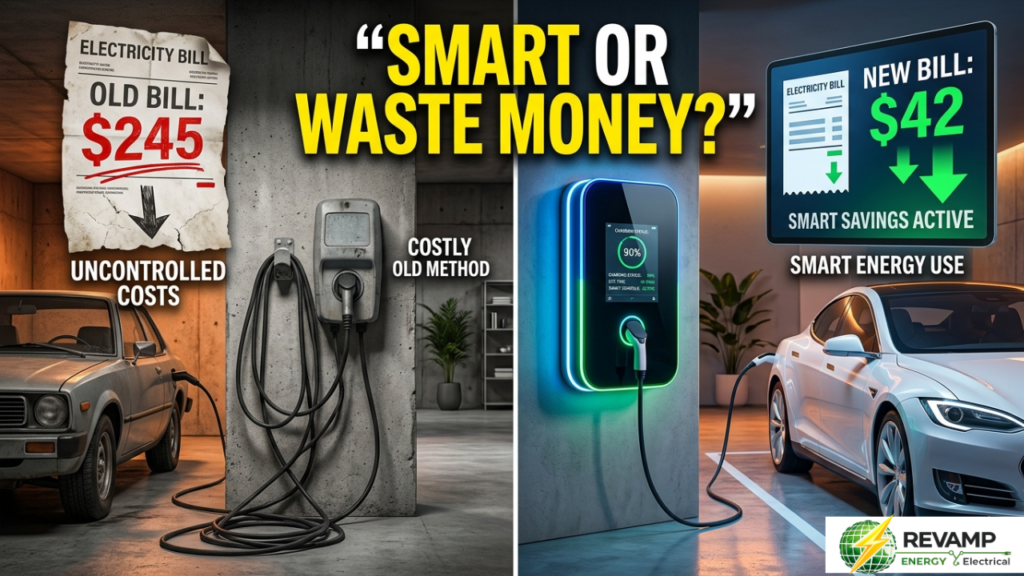
Smart EV Chargers vs Standard Chargers
Introduction
As electric vehicles become more common, more homeowners are installing EV chargers at home.
But many people don’t realize there are two very different types of charging systems:
- Standard EV chargers
- Smart EV chargers
At first glance, they may look similar.
Both charge your vehicle.
But the way they manage energy, monitor charging, and integrate with your home can be completely different.
The right choice depends on:
- Your electrical system
- Energy goals
- Charging habits
- Future upgrades
Understanding the differences can help homeowners avoid expensive mistakes later.
What Is a Standard EV Charger?
A standard EV charger focuses mainly on basic charging functionality.
It delivers electricity directly to the vehicle without advanced monitoring or smart energy features.
These systems are generally simpler and may include:
- Basic charging controls
- Manual operation
- Limited customization
For some homeowners, a standard charger is enough for daily charging needs.
What Is a Smart EV Charger?
A smart EV charger includes advanced technology that allows homeowners to:
- Monitor charging remotely
- Schedule charging times
- Track electricity usage
- Optimize energy consumption
- Integrate with smart home systems
Smart chargers are designed for modern energy management and future home electrification.
1. Energy Monitoring & Usage Tracking
One of the biggest advantages of smart EV chargers is visibility.
Smart chargers allow homeowners to see:
- Charging history
- Electricity usage
- Energy costs
- Charging efficiency
This helps homeowners better understand how EV charging affects overall electricity bills.
Standard chargers usually do not provide detailed energy monitoring.
2. Smart Charging Schedules
Electricity rates often change throughout the day.
Smart chargers can automatically charge vehicles during lower-cost hours.
Benefits include:
- Reduced electricity costs
- Better energy efficiency
- Less strain on the electrical system
Standard chargers typically charge immediately once plugged in.
3. Load Management Features
Modern homes are using more electricity than ever because of:
- EV chargers
- Solar systems
- Battery backups
- Smart appliances
Smart EV chargers can communicate with the home’s electrical system to avoid overload situations.
This helps:
- Balance electrical demand
- Prevent breaker trips
- Reduce stress on older panels
Standard chargers usually lack advanced load balancing features.
4. Solar & Battery Integration
Smart chargers work better with:
- Solar energy systems
- Battery backup systems
- Smart electrical panels
Some systems can prioritize charging using solar energy instead of utility power.
This creates a more efficient home energy ecosystem.
5. Remote Control & Mobile Apps
Most smart chargers include mobile app connectivity.
Homeowners can:
- Start or stop charging remotely
- Receive charging notifications
- Track charging performance
- Monitor electricity usage in real time
Standard chargers usually do not offer these features.
6. Future-Proofing Your Home
As homes become more electrified, energy management matters more.
Smart chargers are designed to work alongside:
- Future EVs
- Smart home systems
- Solar upgrades
- Battery storage
For many homeowners, smart chargers provide better long-term flexibility.
7. Installation Requirements
Both charger types require professional installation.
However, smart chargers may require additional setup involving:
- Wi-Fi connectivity
- Smart panel integration
- Load management configuration
Proper installation ensures safe and efficient operation.
Which Charger Is Better?
The answer depends on your goals.
Standard Chargers May Be Better For:
- Simpler charging needs
- Lower upfront costs
- Homes with minimal energy upgrades
Smart Chargers May Be Better For:
- Long-term energy optimization
- Solar integration
- EV-heavy households
- Smart home systems
- Future electrical expansion
Biggest Mistake Homeowners Make
Many homeowners choose chargers based only on price.
But the cheapest charger may become limiting later if the home adds:
- Solar panels
- Multiple EVs
- Battery storage
- Smart energy systems
Future planning matters more than most people realize.
What Most Homeowners Don’t Realize
Modern EV charging is no longer just about charging a vehicle.
It’s becoming part of a complete energy management system involving:
- Smart electrical panels
- Solar energy
- Battery backup
- Load balancing
The future of home energy is connected—and smart chargers play a major role in that transition.
Why Homeowners Choose ReVamp Energy Solutions
ReVamp Energy Solutions helps homeowners install safe, future-ready EV charging systems designed for modern electrical demand.
We focus on:
- Smart EV charger installation
- Electrical panel upgrades
- Load management systems
- Solar + EV integration
- Future energy planning
Our goal is to create charging systems that work efficiently today while preparing homes for tomorrow.
Our EV & Electrical Services
- Smart EV charger installation
- Standard EV charger installation
- Electrical panel upgrades
- Load calculations and analysis
- Solar integration
- Battery backup systems
- Smart electrical upgrades
What Makes ReVamp Different
- Expertise in modern energy systems
- Customized electrical planning
- Honest recommendations
- Clean professional installation
- Future-focused solutions
We help homeowners build smarter, more reliable energy systems.
Conclusion
Both smart EV chargers and standard chargers can charge your vehicle effectively.
But smart chargers offer far more control, efficiency, and long-term flexibility for modern homes.
As homes continue adding:
- Solar systems
- Battery backups
- Multiple EVs
- Smart technology
smart charging solutions are becoming increasingly valuable.
Choosing the right charger today can help avoid expensive limitations later.
FAQs
Are smart EV chargers worth it
For many homeowners, yes—especially with solar or multiple EVs.
Do smart chargers reduce electricity costs
They can help optimize charging during lower-rate hours.
Can standard chargers charge EVs safely
Yes, when professionally installed correctly.
Do smart chargers work with solar systems
Many smart chargers integrate well with solar and battery systems.