
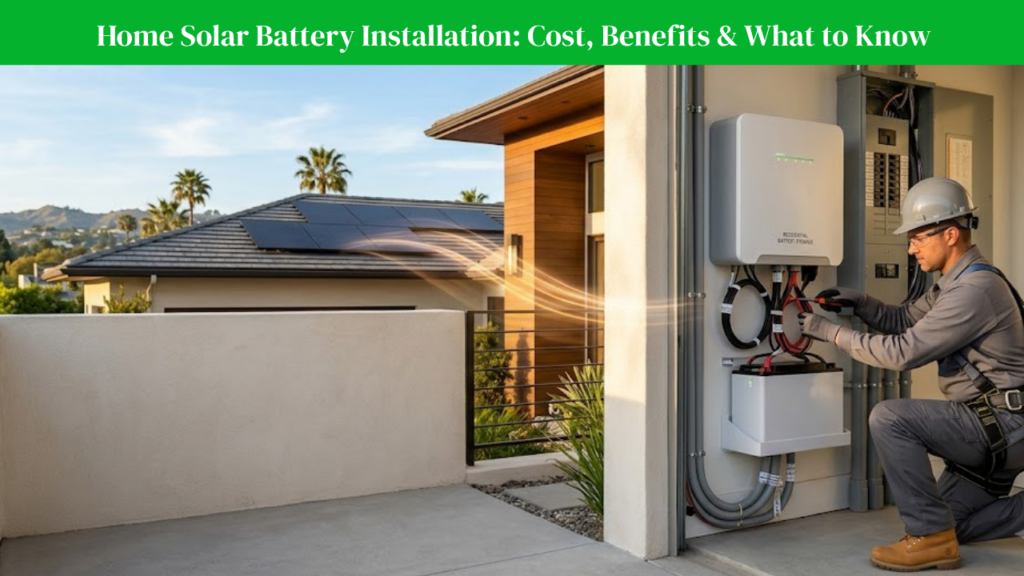
Home solar battery installation is becoming an important part of residential energy planning. Solar panels can generate electricity during daylight hours, but a battery allows homeowners to store some of that energy and use it later. This can be especially useful in the evening, during grid outages, or when solar production is lower.
For homeowners considering solar energy, understanding how battery storage works, what affects installation costs, and whether a battery fits their property is an important part of making an informed decision.
What Is Home Solar Battery Installation?
Home solar battery installation involves adding a battery energy storage system to a residential electrical system. The battery can store electricity generated by solar panels and make that stored energy available when needed.
A typical system may include:
- Solar panels
- Solar inverter or battery-compatible inverter
- Battery storage unit
- Electrical equipment and disconnects
- Monitoring equipment
- Wiring and required protection devices
Depending on the existing solar system, a battery may be installed at the same time as a new solar system or added to an existing installation.
The exact configuration depends on the home’s electrical system, solar array, energy usage, available space, and backup-power requirements.
How Does a Home Solar Battery Work?
During the day, solar panels generate electricity. That electricity can be used immediately by appliances and other electrical loads in the home.
If the solar system produces more electricity than the home is using, the excess energy can be directed into the battery instead of being immediately exported or otherwise unused.
Later, when solar production decreases, the stored energy can be used to power selected electrical loads or, depending on the system design, a larger portion of the home.
A simplified cycle looks like this:
Solar panels → Home electricity use → Battery charging → Stored energy → Home loads
Modern battery systems can also include monitoring and controls that help homeowners understand how much energy is being produced, stored, and consumed.
Home Solar Battery Installation Cost
The cost of home solar battery installation can vary significantly from one property to another. There is no single price that applies to every home because the project depends on battery capacity, equipment, electrical work, labor, and the existing solar system.
Some of the biggest cost factors include:
Battery Capacity
Larger batteries generally cost more because they can store more electricity.
A homeowner with relatively low evening energy consumption may need less storage than a home with high electricity usage or significant backup-power requirements.
Number of Batteries
Some homes can meet their energy-storage goals with one battery. Larger homes or properties with higher electricity consumption may require multiple units.
Installing multiple batteries also requires evaluating available space, electrical connections, equipment compatibility, and system design.
Existing Solar System
If solar panels are already installed, the battery installation may require additional equipment or modifications to make the systems work together properly.
The age and design of the existing inverter can also affect the project.
Electrical Upgrades
Some installations require electrical upgrades before a battery can be added. This could include changes to wiring, disconnects, panels, breakers, or other electrical equipment.
If the home’s existing electrical infrastructure needs modification, the overall project cost can increase.
Backup Power Requirements
There is an important difference between installing a battery for energy management and installing a system designed for backup power.
If a homeowner wants the battery to operate during a grid outage, the system may need additional equipment and controls to safely isolate the home from the utility grid.
What Are the Benefits of Home Solar Battery Storage?
Home solar battery storage can provide several potential benefits beyond simply storing electricity.
Backup Power During Outages
One of the biggest reasons homeowners consider battery storage is backup power.
When properly designed and installed, a battery system can keep selected electrical loads operating during a power outage.
Depending on system capacity, homeowners may be able to maintain important loads such as:
- Refrigerators
- Lighting
- Internet equipment
- Security systems
- Garage doors
- Selected outlets
- Essential HVAC equipment
The amount of backup power available depends on battery capacity and the loads connected to the backup system.
Better Use of Solar Energy
Solar panels typically generate the most electricity during daylight hours. However, many households use substantial amounts of electricity later in the day.
A battery allows some of the daytime solar production to be stored for later use.
This can help homeowners increase the amount of their solar electricity that is consumed on-site.
Greater Energy Independence
Battery storage can give homeowners more control over when stored solar energy is used.
Instead of relying entirely on the utility grid when solar production is low, a properly sized battery system can provide another source of electricity for the home.
Energy Monitoring
Many modern battery systems include monitoring tools that allow homeowners to see energy production, consumption, battery charge levels, and system performance.
This information can help homeowners better understand how their property uses electricity.
How Large Should a Home Solar Battery Be?
Battery size should be based on the home’s actual energy requirements rather than simply choosing the largest available battery.
Important considerations include:
- Average daily electricity consumption
- Evening energy usage
- Solar system size
- Essential loads during outages
- Desired backup duration
- Available installation space
- Existing electrical infrastructure
- Future electricity needs
For example, a homeowner who primarily wants short-term backup for essential appliances may have different requirements from someone who wants to operate larger electrical loads during an extended outage.
Professional system design can help determine the appropriate battery capacity.
Can You Add a Battery to an Existing Solar System?
Yes, a battery can often be added to an existing solar system.
However, compatibility needs to be evaluated before installation.
An existing solar system may use an inverter that was not originally designed for battery storage. Depending on the equipment, the installation may require additional hardware, inverter changes, or a different system configuration.
The age and condition of the existing solar equipment should also be considered.
A professional evaluation can determine whether the existing system can support battery storage and what modifications may be necessary.
Is Solar Battery Backup Worth It?
Whether solar battery storage makes sense depends on the homeowner’s goals and property.
Battery storage may be particularly useful for homeowners who:
- Experience frequent power outages
- Want backup electricity for essential loads
- Have significant evening electricity consumption
- Want to store excess solar production
- Want greater control over their energy use
- Are planning a new solar installation
However, a battery is an additional investment, so homeowners should evaluate the expected benefits alongside installation costs, system lifespan, maintenance requirements, and their electricity usage.
The best solution is not necessarily the largest battery. It is the system that matches the home’s energy needs and the homeowner’s goals.
What to Consider Before Installing a Solar Battery
Before starting a home solar battery installation project, homeowners should evaluate several factors.
Review Your Electricity Usage
Look at how much electricity the home consumes and when that electricity is being used.
Understanding evening and overnight consumption can help determine whether battery storage could provide meaningful value.
Evaluate Your Solar System
If solar panels are already installed, check the system’s inverter, age, capacity, and configuration.
Determine Your Backup Needs
Decide which appliances and electrical circuits you would want to operate during a power outage.
Not every home needs whole-home backup. Some homeowners may only want essential circuits powered.
Consider Available Space
Battery systems need an appropriate installation location that meets equipment and safety requirements.
The available space should be evaluated before selecting equipment.
Review Electrical Requirements
A battery is part of the home’s electrical system, so proper wiring, protection, disconnects, and installation procedures are essential.
Permitting and inspection requirements may also apply depending on the project and local jurisdiction.
Why Professional Installation Matters
Home solar battery installation should be handled by qualified professionals.
Battery storage systems involve electrical equipment, energy management controls, and potentially significant amounts of stored energy. Incorrect installation can create safety problems and may affect system performance or equipment warranties.
A professional installation can include:
- Electrical system evaluation
- Battery sizing
- Equipment selection
- Solar and battery integration
- Wiring and protection
- Backup-load planning
- Permit coordination
- System testing
- Monitoring setup
Professional design is particularly important when a homeowner wants backup power for multiple electrical circuits or larger household loads.
Home Solar Battery Installation in Southern California
For homeowners in Los Angeles and throughout Southern California, solar battery storage can be evaluated as part of a larger residential energy strategy.
ReVamp Energy provides solar and electrical services designed around the property’s existing infrastructure, energy requirements, and project goals. A professional evaluation can help determine whether battery storage is appropriate, how much capacity may be needed, and whether electrical upgrades are necessary.
Because every home’s electrical system is different, battery installation should be based on the actual property rather than a one-size-fits-all package.
Final Thoughts
Home solar battery installation can provide homeowners with stored solar energy, greater control over electricity use, and backup power capabilities when the system is properly designed.
The total cost depends on factors such as battery capacity, the number of batteries, existing solar equipment, electrical upgrades, installation requirements, and backup-power goals.
Before purchasing a battery, homeowners should evaluate their electricity consumption, solar system, backup requirements, available space, and electrical infrastructure.
A properly designed solar battery system can become an important part of a home’s overall energy strategy while helping homeowners make better use of the electricity their solar panels produce.