
Table of Contents
Solar panels are designed to provide reliable energy for many years, but there are situations where they may need to be temporarily removed from a roof.
The most common reason is a roof replacement or major roof repair. If solar panels are installed over the section of roof that needs work, the roofing contractor may not be able to safely access the roof without first having the solar system removed.
This is where solar panel removal and reinstallation becomes important.
The process involves more than simply taking panels off the roof and putting them back. A qualified professional needs to consider the panels, mounting system, electrical connections, wiring, roof condition, and system performance.
If you are planning a roof replacement, renovation, or major repair on a property with solar, understanding the removal and reinstallation process can help you plan the project and avoid unexpected problems.
What Is Solar Panel Removal and Reinstallation?
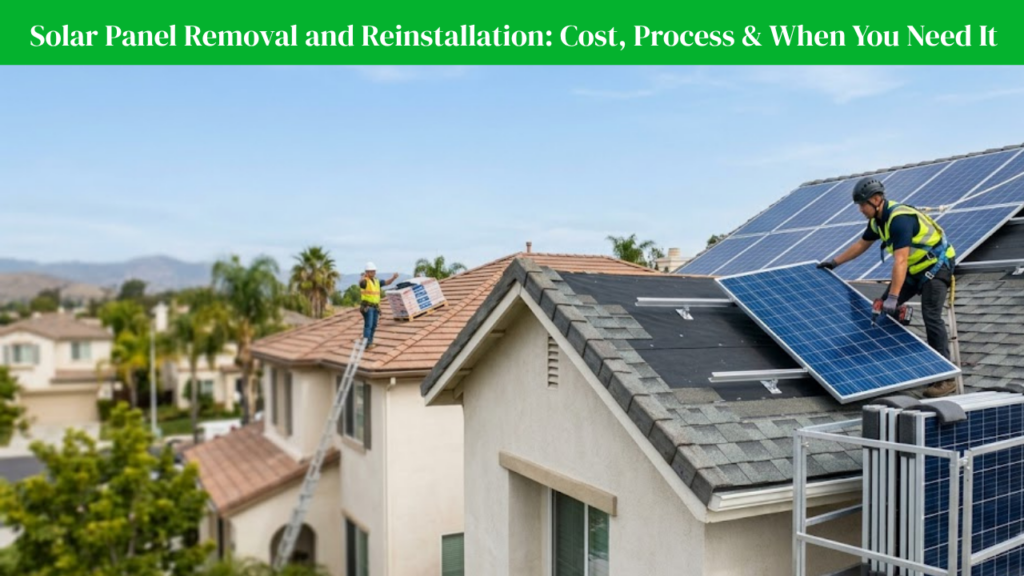
Solar panel removal and reinstallation is the process of temporarily taking an existing solar energy system off a roof and reinstalling it after the necessary roof work has been completed.
The process may include:
- Disconnecting the solar system
- Removing solar panels
- Removing or working around mounting equipment
- Protecting and labeling components
- Safely storing the panels
- Coordinating with the roofing contractor
- Reinstalling the mounting system
- Reinstalling the solar panels
- Reconnecting electrical components
- Testing system performance
The exact process depends on the type of solar installation, roof construction, equipment, and scope of the work.
Why Do Solar Panels Need to Be Removed?
There are several reasons a solar system may need to be removed temporarily.
The most common is roof replacement.
Solar panels can cover a significant portion of a roof. If the roof underneath needs to be removed or replaced, the panels and their mounting equipment may need to come off first.
Other situations may include:
- Major roof repairs
- Structural roof work
- Roof leak investigation
- Re-roofing
- Roof reinforcement
- Electrical upgrades
- Major property renovations
- Solar system modifications
- Changes to roof-mounted equipment
The important question is whether the planned work requires access to the area underneath or around the solar installation.
Solar Panel Removal for Roof Replacement
Roof replacement is one of the most common situations requiring solar panel removal.
A typical project may involve three main parties:
Solar contractor: Removes and later reinstalls the solar system.
Roofing contractor: Performs the roof replacement or repair.
Property owner: Coordinates the overall project and schedules the work.
Communication between the contractors is extremely important.
Ideally, the solar removal should be planned before the roofing project begins. This allows the roofing contractor to work without the solar equipment in the way and allows the solar contractor to plan the reinstallation properly.
How Does Solar Panel Removal and Reinstallation Work?
The exact process varies by system, but a typical project follows several steps.
1. Inspect the Existing Solar System
Before removing anything, the system should be inspected.
The professional may document:
- Number of panels
- Panel locations
- Mounting configuration
- Wiring
- Inverters
- Disconnects
- Electrical equipment
- Existing roof condition
- Overall system layout
Photographs and documentation can help during the reinstallation process.
2. Plan the Removal
The removal should be coordinated with the overall construction schedule.
For a roof replacement, the solar contractor and roofer need to agree on when the system will be removed and when the roof will be ready for reinstallation.
Good scheduling can prevent unnecessary downtime.
3. Safely Disconnect the System
Solar electrical equipment should be handled by qualified professionals.
The system needs to be properly shut down and disconnected according to the equipment and applicable safety requirements.
This is not a DIY project.
4. Remove the Solar Panels
The panels are carefully removed from their mounting system.
Professionals should handle the panels carefully to avoid damage to the glass, frames, connectors, or wiring.
Each component should be organized and protected during the process.
5. Remove or Coordinate the Mounting Hardware
Depending on the roofing project, mounting components may also need to be removed.
Some components may be reusable, while others may need replacement depending on their condition and compatibility with the new roof.
This should be evaluated before reinstallation.
6. Complete the Roof Work
Once the solar system has been removed, the roofing contractor can complete the required roof replacement or repairs.
This is an important stage because the new roof should be ready for the solar system before reinstallation begins.
7. Reinstall the Solar System
After the roof work is completed, the solar contractor can return to reinstall the system.
The panels and mounting equipment are positioned according to the original system design or an updated configuration if changes are required.
8. Reconnect and Test the System
The final stage involves reconnecting the system and checking that it operates correctly.
The professional may inspect:
- Electrical connections
- Wiring
- Mounting
- Inverter operation
- System monitoring
- Panel performance
- Safety equipment
The system should be properly evaluated before being considered operational.
How Much Does Solar Panel Removal and Reinstallation Cost?
The cost varies significantly depending on the system and project.
There is no single price that applies to every solar removal and reinstallation project.
Factors that can affect the cost include:
- Number of solar panels
- Roof size
- Roof accessibility
- System design
- Mounting system
- Type of inverter
- Electrical configuration
- Project location
- Labor requirements
- Condition of existing equipment
- Need for replacement components
- Permitting or inspection requirements
- Distance and scheduling requirements
A small, easily accessible system may require considerably less work than a large system on a complex roof.
The best way to determine the actual cost is to have the existing installation evaluated before the project begins.
Does Roof Replacement Mean the Solar System Needs to Be Reinstalled in the Same Position?
Not necessarily.
In many cases, the existing system can be reinstalled in a similar configuration. However, the final layout may need to change depending on the new roof design, structural considerations, roof dimensions, equipment condition, or other project requirements.
A professional should evaluate the system before deciding whether the original layout should be reused.
Should You Replace the Roof Before Installing Solar?
Ideally, homeowners should consider the remaining life of the roof before installing a new solar system.
Solar panels can remain on a roof for decades. Installing a new solar system on a roof that is already approaching the end of its useful life can create an avoidable problem later.
If the roof needs replacement soon, completing the roofing work before installing or reinstalling solar may be more practical.
For an existing solar system, the situation is different. A professional can inspect the roof and solar installation and help determine the appropriate sequence of work.
Can You Remove Solar Panels Yourself?
Solar panel removal should not be treated as a DIY home improvement project.
A solar installation includes electrical equipment that can present serious safety risks even when the system is not actively producing power.
Improper removal can also damage:
- Solar panels
- Wiring
- Connectors
- Mounting hardware
- Roofing materials
- Inverters
- Electrical equipment
Working with qualified solar and electrical professionals helps reduce these risks and protects the existing system.
What Happens to the Solar System During a Roof Replacement?
When the solar system is removed, it will generally not produce electricity for the property while it is disconnected.
The length of this downtime depends on the roofing schedule and the timing of the reinstallation.
This is why coordination matters.
If the solar contractor removes the system several weeks before the roof is ready, the property could remain without solar production for an extended period.
Planning both phases together can help minimize downtime.
Can Solar Panels Be Reinstalled on a New Roof?
In many cases, existing solar panels can be reinstalled after a roof replacement.
However, the condition and compatibility of the equipment should be evaluated.
A professional may inspect the:
- Solar panels
- Mounting hardware
- Wiring
- Connectors
- Inverter
- Electrical equipment
If certain components are damaged, outdated, or incompatible with the new installation, replacement may be recommended.
This can sometimes make the project more than a simple remove-and-reinstall job.
What If the Solar Panels Are Old?
The age of the solar system matters.
If a system is relatively new and in good condition, removal and reinstallation may make sense.
If the system is older, the property owner may want to evaluate whether reinstalling the existing equipment is the best long-term option.
Depending on the system’s condition, it may be worth considering:
- Reusing the existing system
- Replacing damaged components
- Updating the inverter
- Expanding the system
- Reconfiguring the layout
- Replacing the system entirely
A solar professional can evaluate these options based on the condition of the equipment and the property owner’s goals.
What About Solar Warranties?
Homeowners should understand the warranty terms associated with their equipment and installation.
Solar panels, inverters, mounting systems, and workmanship may have different warranty conditions.
Improper removal or reinstallation can potentially create warranty issues depending on the manufacturer’s requirements and the original installation agreement.
Before starting the project, review the relevant warranty documentation and use qualified professionals who understand the system.
How to Plan a Solar Removal and Reinstallation Project
Good planning can make the process significantly easier.
Coordinate With the Roofing Contractor
The solar and roofing teams should communicate about the project schedule.
The solar contractor needs to know when removal is required and when the roof will be ready for reinstallation.
Inspect the Roof Before Removing the System
If possible, evaluate the roof condition before scheduling the entire project.
This can help determine whether a roof replacement is actually needed and prevent unnecessary removal.
Document the Existing System
Photos and system documentation can help establish how the equipment was originally installed.
This can make the reinstallation process more organized.
Ask About Additional Costs
Before approving the work, ask whether the estimate includes:
- Panel removal
- Equipment storage
- Mounting hardware
- Reinstallation
- Electrical reconnection
- Testing
- Permitting
- Inspection requirements
- Replacement components
Understanding the scope beforehand can reduce surprises.
Plan for System Downtime
Solar production may be interrupted while the system is removed.
Coordinate the project schedule so that the downtime is as short as reasonably possible.
Why Professional Solar Removal Matters
A solar system is both an energy-producing system and an electrical installation.
Removing and reinstalling it requires careful handling of electrical connections, equipment, mounting hardware, and roofing interfaces.
Professional service can help protect the equipment and ensure that the system is properly evaluated after reinstallation.
This is particularly important when the system needs to be integrated with a newly replaced roof.
ReVamp Energy for Solar Panel Removal and Reinstallation
For homeowners and property owners in Los Angeles and Southern California, ReVamp Energy provides solar and electrical expertise for projects involving existing solar systems.
Solar panel removal and reinstallation is particularly important during re-roof projects because the solar system and roof need to be treated as connected parts of the overall project.
ReVamp Energy can help evaluate the existing solar installation, coordinate the removal process, and handle the electrical and solar aspects of getting the system back into operation after the roof work is completed.
With experience in solar energy system design and installation as well as electrical services, ReVamp Energy can help property owners approach these projects with a more coordinated plan.
Final Thoughts
Solar panel removal and reinstallation is commonly needed when a roof requires replacement or major repairs.
The process involves much more than physically removing panels. The system needs to be safely disconnected, carefully removed, properly protected, and professionally reinstalled after the roof work is complete.
The cost depends on the size and complexity of the system, roof accessibility, mounting equipment, electrical configuration, labor, and any components that need replacement.
If you are planning a roof replacement and already have solar panels installed, start planning the solar removal early. Coordinating the solar and roofing work can help reduce downtime, protect your equipment, and make the overall project more efficient.