
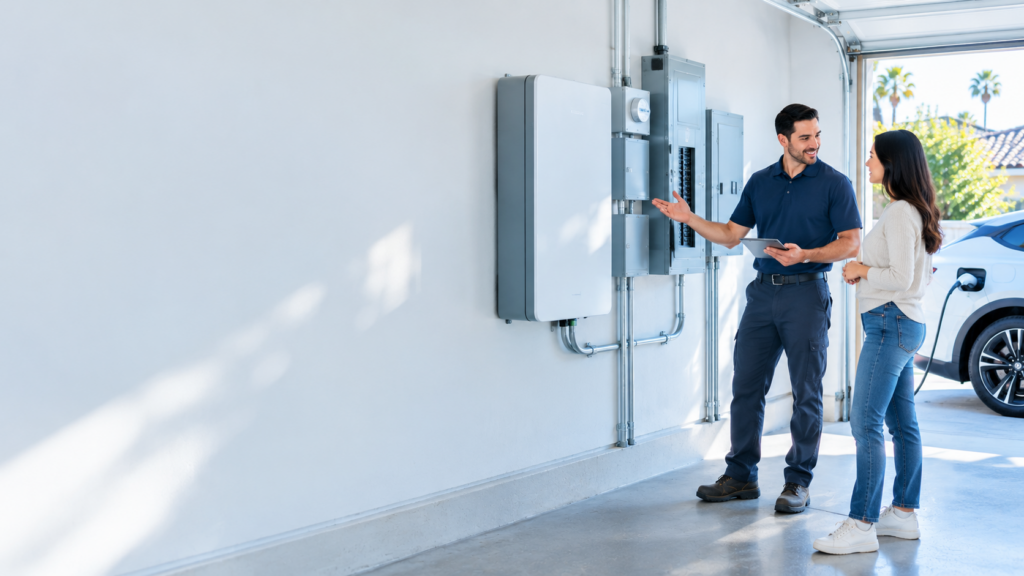
Installing a home battery system in California can help homeowners store solar energy, reduce dependence on the electrical grid, and maintain backup power during outages. However, the upfront cost of battery storage can be a major consideration. California’s Self-Generation Incentive Program (SGIP) offers financial incentives to help eligible customers install energy storage systems.
If you are researching the SGIP battery rebate California program in 2026, understanding the eligibility requirements is important before planning your installation. Not every homeowner automatically qualifies. Eligibility depends on household income, utility provider, property type, program category, and available funding.
This guide explains who may qualify for SGIP, what documents are needed, how the application process works, and what California homeowners should know before installing a battery system.
What Is the SGIP Battery Rebate Program in California?
The Self-Generation Incentive Program (SGIP) is a California incentive program overseen by the California Public Utilities Commission (CPUC). It provides financial incentives for qualifying energy storage and other distributed energy technologies.
For residential customers, SGIP can help reduce the cost of installing eligible battery storage systems. One important pathway is the Residential Solar and Storage Equity program, which prioritizes income-qualified households.
A qualifying battery system can store electricity generated by solar panels or electricity from the grid, depending on the system configuration. The stored energy can then be used when solar production is low, during peak electricity pricing periods, or during an outage if the system is designed and configured for backup operation.
The program is intended to make energy storage more accessible while supporting California’s energy resilience goals.
Who Qualifies for the SGIP Battery Rebate in 2026?
The Residential Solar and Storage Equity pathway is primarily designed for qualifying low-income California households.
For single-family residential properties, applicants generally need to meet one of the following eligibility pathways:
- Household income at or below 80% of the Area Median Income (AMI) for the applicable area.
- Qualifying participation in an approved assistance program, such as CARE, FERA, SASH, DAC-SASH, or the Energy Savings Assistance (ESA) Program, subject to the applicable program rules.
Meeting an income requirement does not automatically guarantee a rebate. Applicants must also meet the applicable utility, property, equipment, documentation, and funding requirements.
1. Low-Income Homeowners
Homeowners whose household income falls at or below 80% of the applicable Area Median Income may qualify for the Residential Solar and Storage Equity pathway.
The AMI limit varies by location and household size. This means the income threshold for a household in Los Angeles may differ from the threshold for a household in another California county.
Applicants should verify the applicable income limit and provide the documentation requested by their program administrator.
2. CARE and FERA Participants
Some households participating in qualifying utility assistance programs may be able to demonstrate income eligibility through their existing program enrollment.
Examples include:
- California Alternate Rates for Energy (CARE)
- Family Electric Rate Assistance (FERA)
- Energy Savings Assistance (ESA)
Other qualifying pathways may include SASH and DAC-SASH participation.
Program participation must meet the current SGIP documentation requirements. Simply being enrolled in a utility discount program should not be treated as automatic approval.
3. Eligible Multifamily Properties
Certain multifamily residential properties may also qualify under the Residential Solar and Storage Equity pathway.
Eligibility can depend on factors such as:
- Whether the building provides deed-restricted low-income housing.
- Whether the property is located in a qualifying disadvantaged community.
- Whether household income requirements are met.
- Whether the property has qualifying funding through programs such as MASH or SOMAH.
Multifamily projects have additional requirements, so property owners and developers should verify the applicable pathway before planning a battery installation.
How Much Is the SGIP Battery Rebate in California?
SGIP incentives are not a single fixed rebate for every homeowner. Incentive amounts depend on the applicable budget category, eligible equipment, approved system capacity, and program rules.
The Residential Solar and Storage Equity pathway has previously published incentive levels of:
- Battery storage: $1,100 per kWh
- Solar installation: $3,100 per kW
These are published program incentive figures, not a guarantee that every applicant will receive those amounts in 2026. Current incentive rates, funding availability, eligible system sizing, and application conditions must be verified before making financial decisions.
For example, a proposed 15 kWh battery should not automatically be assumed to qualify for a $16,500 incentive. The approved capacity, applicable rate, project costs, and funding conditions all matter.
Homeowners should request a project-specific incentive estimate before signing an installation agreement.
Can Homeowners in Los Angeles Qualify for SGIP?
Yes, eligible Los Angeles homeowners may be able to apply, but the process depends on their electricity provider.
Two important utility providers in the Los Angeles area are:
Los Angeles Department of Water and Power (LADWP)
LADWP has its own SGIP application information for qualifying customers. Its published eligibility requirements for the single-family pathway include household income at or below 80% of AMI, verified through the required documentation.
LADWP also notes that funding is limited and that being on a waitlist does not guarantee an incentive award.
Southern California Edison (SCE)
SCE customers may apply through the applicable SGIP program administrator and budget pathway. Eligibility, application steps, and funding availability must be checked using the current program information.
Your utility provider matters because the program administrator and application process can differ.
What Documents Are Needed to Apply for SGIP?
Applicants should prepare the documents required to establish household, utility, property, and equipment eligibility.
Commonly requested documents may include:
- Recent electricity utility bill
- Proof of household income or qualifying assistance-program enrollment
- Property and installation information
- Battery and solar equipment specifications
- Purchase and installation documentation
- Contractor or project information
- Additional forms requested by the program administrator
The exact list depends on the applicable SGIP pathway and utility provider.
It is a good idea to confirm the current documentation requirements before purchasing equipment or starting installation work.
How to Apply for the SGIP Battery Rebate
The SGIP application process involves several steps. Following the correct process can help prevent documentation problems and unnecessary delays.
Step 1: Check Your Eligibility
Start by reviewing the income, utility, property, and program-category requirements. Confirm that your household meets the applicable eligibility pathway.
Step 2: Confirm Funding Availability
Check the current SGIP budget status for your utility provider. Some categories may be closed, operating on a waitlist, or accepting applications only when funding is available.
Step 3: Work With an Approved SGIP Developer
Review the program’s approved developer information and identify a qualified provider familiar with the applicable application process.
Step 4: Prepare Your Application
Collect the requested household, utility, property, and equipment documentation. Submit the application through the appropriate program portal or administrator.
Step 5: Complete the Installation Requirements
Follow the program’s reservation, equipment, installation, inspection, and documentation requirements. Do not assume that installing a battery before obtaining the necessary program approval will qualify for an incentive.
Step 6: Submit the Incentive Claim
After the project meets the required installation and verification conditions, submit the required incentive claim documents. Payment depends on program approval and the applicable funding rules.
Does SGIP Cover the Full Cost of a Home Battery?
Some qualifying projects may receive substantial financial assistance, but homeowners should not assume that every battery installation will be free.
The final incentive depends on the applicable SGIP category, approved system size, equipment eligibility, project costs, and funding conditions.
There may also be costs that are not fully covered, including electrical panel upgrades, additional wiring, installation modifications, and other work outside the eligible project scope.
A professional assessment can help determine the likely installation cost and identify any additional electrical work required.
What If You Do Not Qualify for SGIP?
Not every California homeowner meets the income or property requirements for the Residential Solar and Storage Equity pathway.
If you do not qualify, you can still explore battery installation options based on your energy needs and budget.
Consider:
- Installing a battery with an existing solar system.
- Adding battery storage when installing a new solar system.
- Comparing battery capacity and backup requirements.
- Reviewing utility-specific programs and currently available incentives.
- Evaluating financing options and the long-term value of energy storage.
Incentive programs change over time, so check current eligibility before relying on any rebate when calculating your project budget.
Is Installing a Solar Battery Worth It in California?
A home battery can provide several benefits, particularly for households that want more control over their electricity use.
Backup power: A properly configured battery can supply selected household circuits during a grid outage.
Solar energy storage: Instead of using all solar electricity immediately, homeowners can store excess production for later use.
Energy management: Battery storage can help households manage when they draw electricity from the grid, depending on their utility rate plan and system configuration.
Greater energy resilience: A battery can help reduce dependence on the grid during certain outages, although backup duration depends on battery capacity and household electricity consumption.
Whether a battery is worth the investment depends on installation cost, electricity rates, usage patterns, backup needs, and available incentives.
Get Professional Help With Solar Battery Installation
Understanding SGIP eligibility is an important first step before investing in a home battery system. California homeowners should verify their income eligibility, utility provider, program category, and current funding availability before moving forward.
ReVamp Energy provides solar and battery storage solutions for residential and commercial properties in Los Angeles and Southern California. Our team can help assess your property’s electrical requirements, discuss battery storage options, and plan an installation based on your energy needs.
Thinking about installing a solar battery in Los Angeles? Contact ReVamp Energy to discuss your battery storage requirements and explore your installation options.
Get Your Free Energy Consultation.