
Table of Contents
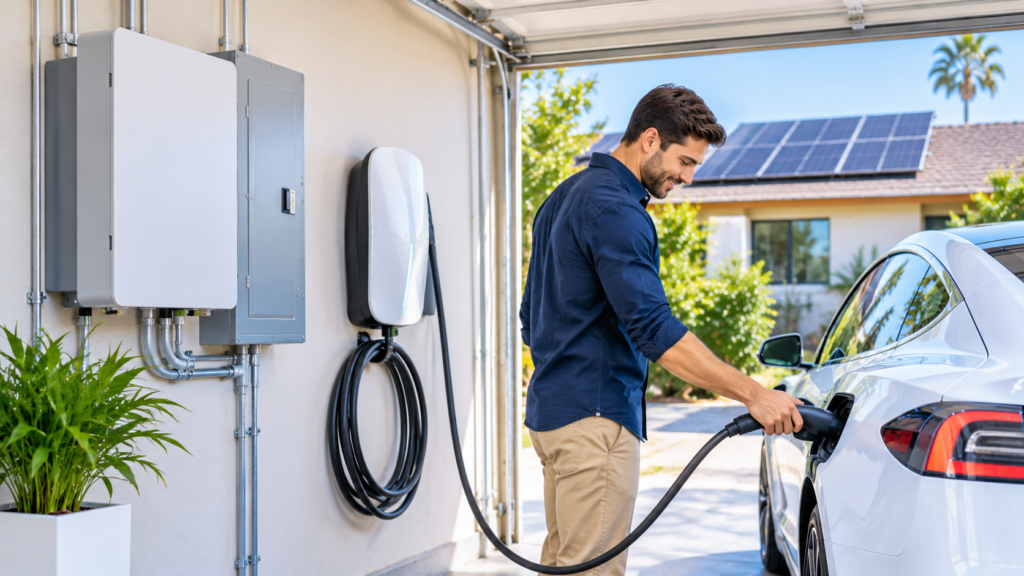
Charging an electric vehicle at home can become even more cost-effective when you combine an EV charger with a residential solar energy system. Instead of relying entirely on electricity from the utility grid, homeowners can use solar-generated electricity to charge their vehicles and make better use of the energy produced by their rooftop solar panels.
A Tesla Wall Connector with solar can be part of a home energy setup designed to use excess solar electricity for EV charging. With the right equipment, configuration, and energy management system, homeowners can coordinate solar production, household electricity consumption, and vehicle charging.
For California homeowners, this combination can be particularly interesting because solar production, electricity rates, and daily driving schedules all affect the potential savings.
This guide explains how solar-powered EV charging works, what equipment is required, how to plan the electrical installation, and what homeowners should consider before combining solar panels with an EV charger.
How Does a Tesla Wall Connector Work With Solar Panels?
A Wall Connector is a home charging unit that supplies electricity to an electric vehicle through a dedicated electrical circuit. When connected to a home with solar panels, the charging system can potentially use electricity generated by the solar installation.
However, the charger does not automatically know how much excess solar electricity your panels are producing simply because solar panels are installed.
An appropriate energy management system is needed to coordinate solar production, household electricity usage, battery storage, and EV charging.
A typical solar-powered EV charging setup includes:
- Rooftop solar panels
- Solar inverter
- Home electrical panel
- EV charging equipment
- Compatible energy monitoring or management system
- Optional home battery storage
During sunny hours, solar panels generate electricity. The home uses some of that electricity for appliances and other electrical loads. Available excess production can then be directed toward charging the vehicle when the system supports this functionality.
If solar production is insufficient, the system may use electricity from the grid or a home battery, depending on its configuration and charging settings.
How Does Solar-Powered EV Charging Work?
The process is relatively straightforward when the home’s electrical and energy management systems are properly configured.
1. Solar Panels Generate Electricity
Rooftop solar panels convert sunlight into electricity. The inverter converts the generated power into usable electricity for the home.
Solar production changes throughout the day depending on sunlight, weather, panel orientation, and system capacity.
2. Your Home Uses Solar Electricity
Before charging your vehicle, your home may already be using electricity for lighting, refrigeration, HVAC equipment, computers, and other appliances.
The remaining solar production may be available for battery storage or EV charging.
3. The Energy System Coordinates EV Charging
A compatible energy management system can monitor available solar production and coordinate charging behavior.
For example, a system configured for excess solar charging can adjust vehicle charging to make greater use of available solar electricity.
4. Your Vehicle Charges From Available Energy
When sufficient solar electricity is available, the vehicle can receive power generated by your rooftop panels.
If production falls or your charging target requires additional electricity, the system’s behavior depends on the selected charging mode and configuration.
This allows homeowners to coordinate vehicle charging with their solar energy production rather than relying entirely on fixed charging schedules.
What Equipment Do You Need for Solar EV Charging?
Installing an EV charger alongside an existing solar system requires more than simply mounting the charging unit on a garage wall.
The electrical equipment and energy management features must work together.
Solar Panel System
A residential solar installation generates the electricity that can be used for vehicle charging.
The required system size depends on household electricity consumption, vehicle mileage, charging requirements, and available roof space.
Solar Inverter
The inverter converts solar-generated electricity into usable AC electricity for the home.
Its capacity and configuration should be considered when planning additional electrical loads.
Wall Connector
A home charging unit provides the electrical connection between the home’s power system and the vehicle.
A Wall Connector can support high-speed home charging, subject to the vehicle’s onboard charging capability and the electrical circuit installed.
Energy Management System
This component is especially important when the goal is to prioritize excess solar production.
Compatible energy monitoring and management equipment can coordinate charging with solar production and household energy use.
Optional Home Battery
A home battery stores electricity for later use.
Depending on the system configuration, stored electricity can help support vehicle charging when solar production is lower. However, homeowners should evaluate whether using stored energy for EV charging makes financial sense compared with other household energy needs.
Can You Charge Your Tesla Only Using Solar Energy?
Yes, but the equipment and system configuration matter.
Tesla offers solar charging features for compatible home energy setups.
Its Charge on Solar feature requires a compatible Tesla vehicle, a Tesla solar installation with Powerwall, and supported software.
Tesla also introduced Smart Charging for compatible Powerwall and Wall Connector systems. This provides charging modes that can coordinate vehicle charging with solar production and electricity rates.
For the current Smart Charging setup, the stated minimum requirements include:
- Powerwall 2, Powerwall+ or Powerwall 3 with compatible firmware.
- Wall Connector 3 or Universal Wall Connector with compatible firmware.
- Compatible Tesla mobile application.
- Powerwall and Wall Connector paired at the same energy site.
- Compatible network connectivity.
The exact requirements depend on the feature being used.
One important distinction: a Wall Connector installed alongside an ordinary solar system does not automatically provide solar-only charging. The compatible energy equipment and software configuration must be verified first.
How Many Solar Panels Do You Need to Charge an Electric Vehicle?
The number of solar panels required depends on how far you drive, your vehicle’s energy efficiency, panel output, and local sunlight conditions.
Consider a simplified example.
Suppose a homeowner drives approximately 30 miles per day and their vehicle consumes an average of 3 miles per kWh.
Estimated daily charging energy:
30 miles ÷ 3 miles per kWh = 10 kWh.
If each solar panel has a rated capacity of 400 watts, producing an average of 1.5 kWh per day under the assumed conditions:
10 kWh ÷ 1.5 kWh = approximately 7 panels.
This is only an illustrative calculation. Actual production varies with shading, orientation, weather, system losses, and seasonal sunlight. Additional capacity may be needed to account for household consumption and charging losses.
A professional solar assessment can help determine the appropriate system size for your property.
Is It Better to Charge Your EV During the Day or at Night?
The best charging schedule depends on your solar production, utility rate plan, battery storage, and driving routine.
Daytime charging
Charging during sunny hours can help you use electricity generated directly by your rooftop solar panels.
Potential advantages include:
- Better use of excess solar electricity.
- Reduced reliance on grid electricity during charging.
- Less need to export surplus solar production.
- Opportunity to coordinate charging with solar production.
Nighttime charging
Nighttime charging may be convenient for homeowners who return home after sunset.
However, if solar production is unavailable, charging generally relies on stored battery energy or electricity from the utility grid.
If your utility offers time-of-use pricing, charging during lower-cost periods may be more economical.
The best approach is to compare your utility rate schedule with your solar production and daily driving requirements.
What Are the Benefits of Combining Solar Panels and an EV Charger?
Combining a residential solar system with an EV charger can provide several practical advantages.
Make Better Use of Solar Energy
Homeowners can use a greater portion of their solar electricity for household consumption and vehicle charging.
Reduce Dependence on Grid Electricity
Charging with available solar production can reduce the amount of electricity purchased from the utility.
Support Long-Term Energy Planning
A combined solar and EV charging system can help homeowners plan for additional electrical needs as they adopt electric vehicles.
Convenient Home Charging
A dedicated home charging unit allows homeowners to charge their vehicles without depending entirely on public charging stations.
Better Energy Management
Compatible monitoring systems can help homeowners understand how electricity is generated, stored, and consumed throughout the property.
Actual savings depend on system cost, electricity rates, solar production, charging habits, and available incentives.
What Should You Consider Before Installing a Wall Connector With Solar?
Before installing a home EV charger, it is important to evaluate the entire electrical system.
Consider these factors:
Electrical panel capacity: The existing electrical panel must be evaluated to determine whether it can support the additional charging load.
Solar system size: Your existing solar installation should be reviewed to understand how much electricity it generates and whether additional capacity may be beneficial.
Charging requirements: Your daily driving distance and vehicle charging needs help determine the appropriate charger configuration.
Energy management compatibility: Confirm that the proposed charging equipment and solar energy system support the desired charging features.
Home battery requirements: If you want to coordinate battery storage with vehicle charging, verify system compatibility and battery operating modes.
Permits and installation: Electrical permits and inspections may be required depending on the project and local jurisdiction.
A proper assessment can identify potential electrical upgrades and help avoid unnecessary installation costs.
How Much Does It Cost to Install an EV Charger With Solar in Los Angeles?
The total installation cost depends on whether you already have solar panels and what additional electrical equipment is required.
Typical cost components include:
- EV charging equipment.
- Dedicated electrical circuit.
- Wiring and conduit.
- Electrical panel modifications.
- Solar system installation or expansion.
- Energy management equipment.
- Optional home battery storage.
- Permits and inspections.
A homeowner who already has a properly sized solar installation may only need the EV charger and compatible electrical or energy management upgrades.
A property requiring a new solar system, battery storage, or electrical panel upgrade will have a different project budget.
The best way to estimate the total cost is to evaluate the existing electrical infrastructure and the homeowner’s charging requirements before selecting equipment.
Is Solar-Powered EV Charging Worth It in California?
For many California homeowners, combining solar panels with home EV charging can be worth evaluating.
The potential financial benefits depend on the household’s electricity rates, solar production, vehicle mileage, and the amount of excess solar energy available.
Homeowners should compare the cost of installing the solar system and charger against their expected electricity expenses and long-term charging needs.
A battery may provide additional flexibility, but it also increases the overall investment.
Rather than assuming every solar and EV combination produces the same savings, homeowners should consider their actual electricity usage and utility rate plan.
Get Professional Solar and EV Charger Installation in Los Angeles
Combining solar panels with home EV charging requires careful planning to ensure that the electrical equipment, solar inverter, charging unit, and energy management system work together.
ReVamp Energy provides residential and commercial solar installation, EV charger installation, battery storage, and electrical services throughout Los Angeles and Southern California.
Whether you already have solar panels or are planning a new solar installation, our team can help evaluate your electrical requirements and discuss a charging solution that fits your property.
Want to charge your electric vehicle using your home’s solar energy? Contact ReVamp Energy to discuss your solar and EV charger installation options.