
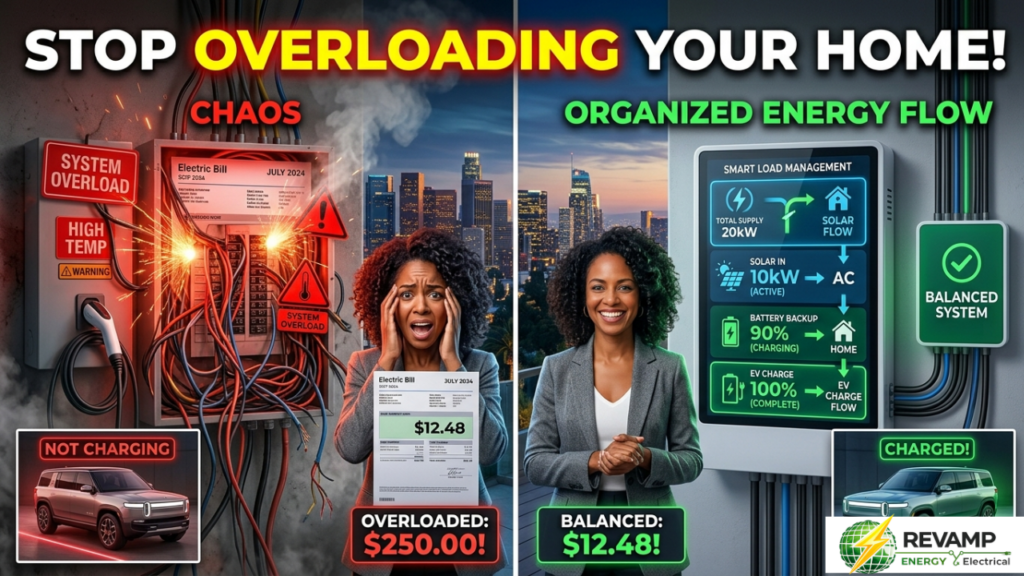
Understanding Electrical Load Management
Table of Contents
Introduction
Modern homes are using more electricity than ever before.
Just a few years ago, most homes only needed power for:
- Lighting
- Appliances
- Air conditioning
- Electronics
Today, many homeowners are adding:
- EV chargers
- Solar systems
- Battery backups
- Heat pumps
- Smart home technology
As electrical demand increases, many homeowners face a common problem:
Their existing electrical system wasn’t designed for all this additional power.
That’s where electrical load management becomes extremely important.
Load management helps homes use electricity more efficiently without necessarily requiring expensive electrical upgrades.
What Is Electrical Load Management?
Electrical load management is the process of monitoring and controlling how electricity is used throughout a property.
Instead of allowing every device to draw maximum power simultaneously, a load management system intelligently balances electrical demand.
Think of it as traffic control for your home’s electricity.
The goal is to:
- Prevent overloads
- Improve efficiency
- Protect electrical equipment
- Optimize energy usage
Why Load Management Matters More Than Ever
Modern homes often operate much closer to their electrical capacity than older homes did.
For example:
A home may be running:
- Air conditioning
- Electric oven
- Clothes dryer
- EV charger
- Pool equipment
all at the same time.
Without proper management, this can place significant stress on the electrical system.
Load management helps prevent these issues before they become problems.
How Electrical Load Management Works
A load management system continuously monitors power usage.
When electrical demand becomes too high, the system can:
- Reduce power to certain devices
- Delay specific loads
- Prioritize critical equipment
- Balance energy consumption automatically
This helps keep total usage within safe limits.
1. Helps Avoid Electrical Overloads
One of the biggest benefits is overload prevention.
Without load management, excessive demand can cause:
- Breaker trips
- System stress
- Equipment damage
- Reduced reliability
Smart load balancing helps prevent these situations.
2. Can Reduce the Need for Panel Upgrades
Many homeowners assume adding an EV charger automatically requires a panel upgrade.
In some situations, load management may allow homeowners to install new equipment while safely using existing electrical capacity.
This can potentially reduce upgrade costs.
3. Supports EV Charger Installation
EV charging is one of the fastest-growing reasons homeowners explore load management.
A smart system can:
- Monitor household usage
- Adjust charging power when needed
- Prevent service overloads
This helps make EV charging more efficient and practical.
4. Improves Energy Efficiency
Load management helps distribute electricity more effectively throughout the property.
Benefits include:
- Better energy utilization
- Reduced waste
- Improved system performance
- More efficient power distribution
5. Works Well with Solar & Battery Systems
Modern energy systems often combine:
- Solar panels
- Battery storage
- EV chargers
- Smart electrical panels
Load management helps all these systems work together more efficiently.
This creates a more balanced and optimized energy ecosystem.
6. Increases Electrical System Reliability
When electrical systems operate under constant stress, components wear out faster.
Load management helps reduce strain on:
- Breakers
- Panels
- Circuits
- Connected equipment
This can improve overall system reliability.
Common Examples of Load Management
A load management system may temporarily adjust:
- EV charging speed
- Pool equipment operation
- Water heater usage
- HVAC equipment
- Battery charging schedules
Most homeowners never notice these adjustments because they happen automatically.
Who Benefits Most from Load Management?
Load management is especially valuable for properties with:
- EV chargers
- Solar systems
- Battery backup systems
- Older electrical panels
- High electrical demand
As homes become more electrified, load management becomes increasingly important.
Biggest Mistake Homeowners Make
Many homeowners assume more power always means a bigger panel.
In reality, smarter energy management can sometimes solve capacity challenges more efficiently.
Every home should be evaluated individually before major upgrades are planned.
What Most Homeowners Don’t Realize
The future of home energy isn’t simply generating more electricity.
It’s managing electricity intelligently.
Homes that effectively balance energy usage often achieve:
- Better efficiency
- Lower operating costs
- Greater flexibility
- Improved reliability
This is why load management is becoming a key part of modern electrical systems.
Why Homeowners Choose ReVamp Energy Solutions
ReVamp Energy Solutions helps homeowners design smarter electrical systems capable of supporting modern energy demands.
We focus on:
- Electrical load calculations
- Smart load management solutions
- EV charger installation
- Electrical panel upgrades
- Solar and battery integration
Our goal is to help homeowners maximize electrical capacity while improving efficiency and reliability.
Our Services
- Electrical panel upgrades
- Load management systems
- EV charger installation
- Solar integration
- Battery backup systems
- Electrical inspections
- Smart electrical upgrades
What Makes ReVamp Different
- Expertise in modern energy systems
- Customized planning
- Future-focused solutions
- Honest recommendations
- Professional installation
We help homeowners create smarter, more efficient electrical systems built for the future.
Conclusion
Electrical load management is becoming one of the most valuable tools for modern homes.
As energy demand continues growing, smart load balancing helps homeowners:
- Avoid overloads
- Improve efficiency
- Support EV charging
- Optimize solar systems
- Reduce unnecessary upgrade costs
Understanding how load management works can help homeowners make smarter decisions about their electrical future.
FAQs
What is electrical load management?
It is the process of balancing and controlling electrical demand throughout a property.
Can load management help with EV chargers?
Yes, many systems are specifically designed to support EV charging safely.
Does load management replace a panel upgrade?
In some situations it may reduce the need for immediate upgrades, but every home is different.
Is load management useful with solar systems?
Yes, it helps optimize how energy is distributed and used throughout the property.