
Introduction
California has some of the most comprehensive building and energy standards in the country. As buildings become more energy efficient and environmentally responsible, property owners, contractors, developers, and businesses need to understand the requirements that may apply to their projects.
One important part of California’s building regulations is CalGreen Code Compliance.
CALGreen, short for the California Green Building Standards Code, establishes requirements designed to improve the environmental performance and efficiency of buildings throughout California.
For property owners planning new construction, renovations, additions, or certain other building projects, understanding CALGreen requirements can help avoid compliance problems and unnecessary project delays.
But what exactly is CalGreen Code Compliance, and who needs to follow it?
Let’s take a closer look.
What Is CalGreen Code Compliance?
CalGreen Code Compliance refers to meeting the applicable requirements established by California’s Green Building Standards Code.
CALGreen is part of California’s broader building code framework and addresses areas related to sustainable construction and building performance.
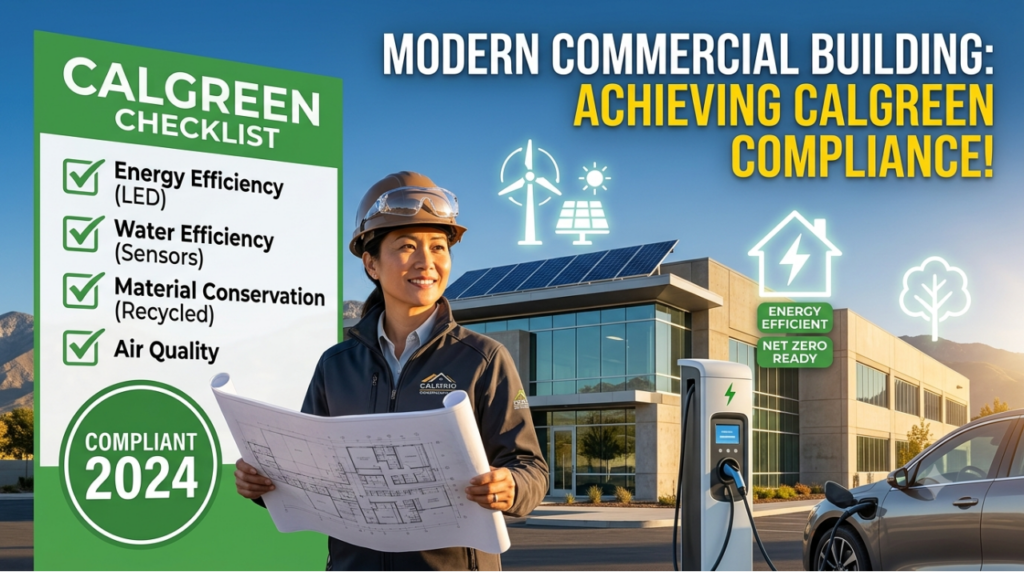
Depending on the type and scope of a project, requirements may address areas such as:
- Energy efficiency
- Water efficiency
- Material conservation
- Indoor environmental quality
- Construction waste management
- Electric vehicle infrastructure
- Sustainable building practices
The specific requirements depend on the building type, project scope, applicable code edition, and whether mandatory or voluntary measures apply.
Why Was CALGreen Created?
California developed CALGreen to encourage more sustainable construction practices and reduce the environmental impact of buildings.
Buildings consume significant amounts of energy and water throughout their operating lives. Construction also produces waste and uses substantial quantities of materials.
CALGreen addresses these areas by establishing building standards intended to improve efficiency and sustainability.
The code has also evolved over time as California’s building and energy goals have changed.
Who Needs CalGreen Code Compliance?
CALGreen requirements can apply to a wide range of construction projects throughout California.
Depending on the project, this may include:
- New residential construction
- Commercial buildings
- Offices
- Retail properties
- Restaurants
- Warehouses
- Multifamily buildings
- Certain additions
- Certain renovation projects
The exact requirements are determined by the applicable building codes and the project itself.
Property owners should not assume that only large commercial developments are affected.
CALGreen for Commercial Buildings
Commercial property owners should pay particular attention to CALGreen requirements when planning new construction or significant improvements.
Commercial projects may involve requirements related to:
- Energy efficiency
- Lighting
- Water conservation
- EV charging infrastructure
- Construction waste
- Building materials
- Indoor environmental quality
The applicable requirements depend on the building and project classification.
CALGreen and Energy Efficiency
Energy efficiency is an important part of California’s approach to building performance.
Energy-related requirements may influence decisions involving:
- Lighting systems
- HVAC equipment
- Electrical systems
- Building controls
- Renewable energy
- Energy management
For businesses, meeting applicable requirements can also create opportunities to reduce long-term operating costs.
CALGreen and EV Charging
The growth of electric vehicles has made EV infrastructure an increasingly important part of California construction planning.
Depending on the building type and project requirements, EV-ready or EV charging provisions may apply.
This can influence electrical planning before construction begins.
For example, a project may need to consider:
- Electrical capacity
- EV-ready spaces
- Charging equipment
- Conduit pathways
- Panel capacity
- Future charging expansion
Planning EV infrastructure early can help reduce the cost and complexity of future upgrades.
CALGreen and Water Efficiency
Water conservation is another important area covered by California’s green building standards.
Applicable requirements can address water-efficient fixtures and other strategies designed to reduce unnecessary water consumption.
For commercial properties, water-efficient systems can also help reduce long-term operating expenses.
Construction Waste Management
Construction and demolition projects can generate significant amounts of waste.
CALGreen includes provisions related to construction waste management.
Depending on the project, contractors may need to implement procedures for:
- Waste sorting
- Recycling
- Material recovery
- Construction debris management
Proper planning can help contractors meet applicable requirements while reducing unnecessary waste.
Indoor Environmental Quality
Building occupants spend significant amounts of time indoors, making indoor environmental quality an important consideration.
Depending on the project, CALGreen provisions may address areas such as:
- Indoor air quality
- Ventilation
- Low-emitting materials
- Moisture management
These measures can contribute to healthier and more comfortable indoor environments.
Mandatory vs Voluntary CALGreen Measures
One important concept to understand is that CALGreen contains different types of requirements.
Mandatory Requirements
Mandatory measures are requirements that applicable projects must follow.
They form the baseline for CALGreen compliance.
Voluntary Measures
CALGreen also includes additional measures that can be adopted when a project or jurisdiction chooses to pursue higher levels of sustainability.
The applicability of these measures depends on the project and local requirements.
Does Every Building Have the Same CALGreen Requirements?
No.
CALGreen requirements vary depending on factors such as:
- Building type
- Project size
- New construction vs renovation
- Occupancy
- Location
- Scope of work
- Applicable code edition
- Local jurisdiction
This is why property owners should evaluate their specific project instead of assuming that one set of requirements applies to every building.
CALGreen and Electrical Systems
Electrical systems can play an important role in meeting modern building requirements.
Depending on the project, electrical planning may involve:
- Energy-efficient lighting
- Electrical load management
- EV charging infrastructure
- Solar systems
- Energy storage
- Efficient electrical equipment
For projects involving major electrical upgrades, compliance should be considered during the design stage rather than after installation.
CALGreen and Solar Energy
California properties increasingly incorporate solar energy into their building designs.
Solar systems can help reduce reliance on grid electricity and support broader energy efficiency goals.
For projects where solar is required or incorporated into the design, electrical infrastructure should be planned accordingly.
This may include:
- Solar-ready infrastructure
- Electrical panel capacity
- Equipment placement
- Conduit pathways
- Service requirements
- Battery storage planning
CALGreen and Building Renovations
Property owners sometimes assume CALGreen applies only to completely new buildings.
However, certain renovation, alteration, addition, and change-of-use projects may trigger applicable requirements.
The specific requirements depend on the scope and classification of the project.
Before beginning a significant renovation, it’s important to determine which codes and requirements apply.
Why Compliance Should Be Considered Early
Waiting until the end of a construction project to address compliance can create unnecessary problems.
Potential consequences can include:
- Project delays
- Additional construction costs
- Required modifications
- Inspection problems
- Rework
Including compliance considerations during the planning and design stages can make the process much smoother.
Common CALGreen Compliance Mistakes
Assuming Every Project Has the Same Requirements
CALGreen requirements depend on the specific project.
Ignoring Local Requirements
Local jurisdictions may have additional requirements or amendments that need to be considered.
Waiting Until Inspection
Compliance should be addressed during planning rather than discovered at the final inspection.
Forgetting Future Electrical Needs
EV charging, solar, and energy storage can affect electrical planning and should be considered early.
Poor Documentation
Proper project documentation can be important for demonstrating that applicable requirements have been addressed.
How Electrical Contractors Can Help With CALGreen Projects
Electrical contractors can play an important role in projects where electrical requirements are part of the compliance strategy.
They may assist with:
- Electrical load calculations
- Panel upgrades
- EV charging infrastructure
- Energy-efficient electrical systems
- Solar integration
- Battery storage
- Electrical inspections
- Code-related electrical work
However, CALGreen compliance involves more than electrical work. The appropriate building professionals should be involved in evaluating the complete project.
Why Choose ReVamp Energy Solutions?
At ReVamp Energy Solutions, we help California property owners and businesses improve their electrical infrastructure while preparing for modern energy requirements.
Our services include:
- Electrical safety inspections
- Electrical panel upgrades
- Commercial electrical services
- EV charger installation
- Solar installation
- Battery storage
- Electrical code compliance support
We work with property owners to develop electrical solutions that support safety, efficiency, and long-term building requirements.
Conclusion
CalGreen Code Compliance is an important consideration for many construction and renovation projects in California.
The requirements are designed to encourage more energy-efficient, water-efficient, and environmentally responsible buildings while establishing standards for sustainable construction practices.
Because requirements vary based on the project, building type, location, and applicable code edition, property owners should determine their specific obligations before construction begins.
Whether you’re developing a commercial property, renovating an existing building, installing EV charging infrastructure, or upgrading electrical systems, considering CALGreen requirements early can help prevent delays and unnecessary costs.
FAQs
What does CalGreen Code Compliance mean?
CalGreen Code Compliance means meeting the applicable requirements of California’s Green Building Standards Code for a qualifying construction or building project.
Who needs to comply with CALGreen?
CALGreen requirements can apply to many new construction projects and certain additions, alterations, and other building work in California. Exact requirements depend on the project.
Does CALGreen apply to commercial buildings?
Yes. Commercial buildings can be subject to CALGreen requirements depending on their classification and project scope.
Does CALGreen require EV chargers?
Certain California projects may have EV-ready or EV charging requirements. The specific requirements depend on the building type, project scope, and applicable code.
Does CALGreen apply to renovations?
Certain renovation, alteration, addition, and change-of-use projects may trigger applicable CALGreen requirements. The project must be evaluated individually.
Can an electrical contractor help with CALGreen compliance?
An electrical contractor can assist with electrical portions of a project, such as EV charging, electrical upgrades, energy-efficient systems, and related electrical code requirements. Complete CALGreen compliance may involve multiple building professionals.
How can ReVamp Energy Solutions help?
ReVamp Energy Solutions provides electrical inspections, panel upgrades, commercial electrical services, EV charger installation, solar installation, battery storage, and electrical code compliance support for California properties.