
Table of Contents
Understanding Commercial Electrical Cost is important for any business planning a new build-out, renovation, electrical upgrade, tenant improvement, or ongoing electrical work. Unlike a simple residential repair, commercial electrical projects can involve larger electrical services, distribution equipment, lighting systems, dedicated circuits, specialized equipment, code requirements, and significantly more labor.
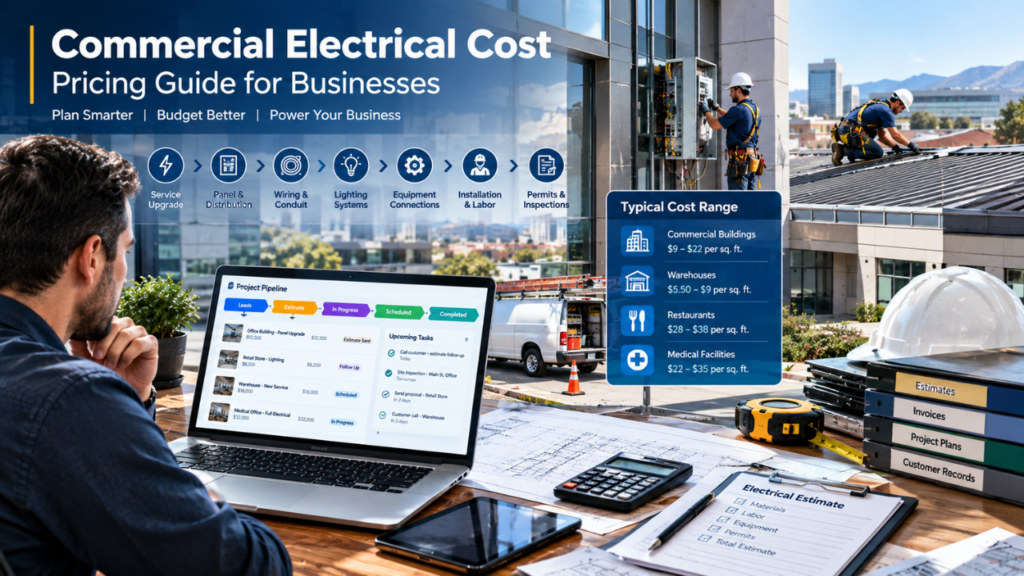
There is no single price that applies to every commercial property. Current 2026 industry estimates put many commercial electrical installations in the range of roughly $8 to $30 per square foot, while more complex facilities can exceed that range. One recent commercial estimating benchmark places typical installed costs around $9–$22 per square foot, with warehouses often lower and restaurants, medical facilities, and other high-load buildings considerably higher.
The actual price depends on the building type, electrical load, existing infrastructure, project scope, local labor rates, materials, accessibility, and whether the project requires a service or panel upgrade.
What Is Included in Commercial Electrical Work?
Commercial electrical work can cover much more than installing outlets and lights.
Depending on the project, an electrical contractor may handle:
- Electrical service installation or upgrades
- Main distribution equipment
- Electrical panels and subpanels
- Branch circuits
- Commercial lighting
- Emergency lighting
- Dedicated equipment circuits
- Receptacles and switches
- Conduit and raceways
- Wiring and cable installation
- Electrical grounding
- Surge protection
- EV charging infrastructure
- Generator connections
- Electrical code corrections
- Tenant improvements
- Electrical inspections and testing
- Maintenance and repairs
The scope of work has a major effect on the final price.
A small retail electrical modification and a complete electrical installation for a new commercial building should not be compared using the same cost-per-square-foot number.
Commercial Electrical Cost Per Square Foot
Using a square-foot estimate can be useful during the early planning stage.
Current 2026 commercial estimating benchmarks show substantial differences between building types.
| Commercial Property | Approximate Electrical Cost |
|---|---|
| Basic warehouse | $5.50–$9+ per sq. ft. |
| Typical commercial building | $9–$22 per sq. ft. |
| Office / tenant improvement | $12–$22+ per sq. ft. |
| Retail | $16–$24+ per sq. ft. |
| Medical / specialized facility | $22–$35+ per sq. ft. |
| Restaurant / high-load facility | $28–$38+ per sq. ft. |
These figures are planning benchmarks, not guaranteed quotes. A detailed electrical takeoff is necessary for an accurate project price because electrical cost is driven by load density, service size, equipment, circuit count, and installation requirements—not simply building size.
Commercial Electrical Cost: What Affects the Price?
Several factors can significantly change the price of a commercial electrical project.
1. Building Type
A warehouse typically has a different electrical profile from a restaurant, medical office, retail store, or manufacturing facility.
For example, a restaurant may require numerous dedicated circuits for:
- Commercial ovens
- Refrigeration
- Freezers
- Dishwashers
- Exhaust equipment
- HVAC
- Lighting
- Point-of-sale equipment
The greater the electrical equipment density, the more infrastructure and labor the project may require.
2. Electrical Load
Electrical load is one of the most important factors in commercial pricing.
A business may need electricity for:
- HVAC systems
- Commercial kitchen equipment
- Computers and servers
- Manufacturing machinery
- Refrigeration
- Lighting
- EV chargers
- Elevators
- Pumps
- Specialized equipment
Higher loads can require larger conductors, additional panels, larger service equipment, or utility coordination.
3. Existing Electrical Infrastructure
A new commercial building and an older building undergoing renovation present very different challenges.
Existing buildings may have:
- Outdated panels
- Limited service capacity
- Damaged wiring
- Insufficient circuits
- Poorly documented electrical systems
- Limited space for new equipment
In some situations, the contractor may need to upgrade existing infrastructure before new equipment can be added.
4. Accessibility
The difficulty of reaching the installation area can significantly affect labor.
Running conduit and wiring through an open construction site is generally different from installing new circuits in a finished commercial property.
Costs may increase when electricians have to work around:
- Finished walls
- Suspended ceilings
- Existing equipment
- Tight mechanical spaces
- Occupied work areas
- Multiple floors
5. Materials
Material prices are another component of commercial electrical pricing.
A project can require substantial quantities of:
- Copper conductors
- Conduit
- Electrical panels
- Breakers
- Disconnects
- Switchgear
- Lighting equipment
- Devices
- Grounding materials
Copper and other electrical materials can have meaningful effects on project pricing, especially on large installations.
6. Labor
Commercial electrical work requires skilled labor and careful coordination.
Current 2026 pricing guides commonly place commercial electrician billed rates around $75–$150+ per hour, with contractor billing rates potentially reaching higher levels depending on the market, project complexity, overhead, licensing, insurance, and scope.
A contractor’s billed rate is not simply the electrician’s wage. It can include:
- Labor
- Insurance
- Licensing
- Vehicles
- Tools
- Administration
- Project management
- Business overhead
- Contractor margin
That is why comparing electrical quotes based only on hourly labor rates can be misleading.
New Construction vs. Commercial Electrical Renovation
The condition of the property can make a major difference.
New Construction
New construction usually provides better access to walls, ceilings, electrical rooms, and pathways before finishes are installed.
The electrical contractor can plan:
- Service location
- Panel locations
- Conduit routes
- Branch circuits
- Lighting
- Equipment connections
- Future capacity
This makes it easier to coordinate the electrical system with the rest of the building.
Existing Commercial Property
Renovation can be more complicated.
Electricians may have to work around existing walls, ceilings, tenants, equipment, and active business operations.
This can increase labor time and require temporary shutdowns or phased work.
Commercial Electrical Panel and Service Upgrades
A commercial property may require a panel or service upgrade when the existing electrical infrastructure cannot safely support the planned load.
For example, a business adding:
- Large HVAC equipment
- Commercial kitchen equipment
- Manufacturing machinery
- Multiple EV chargers
- Additional refrigeration
- New production equipment
may need an electrical load evaluation before the equipment is installed.
A panel upgrade is not simply a matter of installing a larger breaker.
The entire electrical system needs to be evaluated to determine whether the existing service, conductors, distribution equipment, and other components can support the additional demand.
How Much Does a Commercial Electrical Service Call Cost?
Small commercial electrical repairs are priced differently from complete installations.
A minor service call may involve:
- Diagnosing an electrical problem
- Replacing a device
- Repairing a circuit
- Troubleshooting lighting
- Replacing a breaker
- Correcting a small electrical issue
Current 2026 commercial electrician pricing guides show that basic service work can range from relatively small repair costs to several thousand dollars for larger repairs and upgrades, depending heavily on the scope.
For that reason, businesses should describe the problem as specifically as possible when requesting a quote.
Example Commercial Electrical Budgets
Consider a hypothetical 10,000-square-foot commercial property.
If the electrical installation falls around $9–$22 per square foot, the preliminary electrical budget could be approximately:
10,000 sq. ft. × $9 = $90,000
to
10,000 sq. ft. × $22 = $220,000
This is only an early-stage budgeting example.
A warehouse with basic lighting and power could fall toward the lower end, while a high-density office, restaurant, medical facility, or specialized commercial space could require considerably more.
The final quote should be based on the actual plans, equipment schedule, electrical load, materials, labor, and site conditions.
Why a Detailed Electrical Estimate Matters
A square-foot estimate is useful for preliminary budgeting, but it should not replace a detailed estimate.
A professional commercial electrical estimate may account for:
- Quantity of circuits
- Conduit lengths
- Wire sizes
- Panel quantities
- Breakers
- Switchgear
- Lighting fixtures
- Devices
- Equipment connections
- Labor hours
- Lift or access requirements
- Testing
- Permits
- Inspections
- Project management
- Material delivery
- Contingencies
Detailed estimating helps identify the actual scope instead of relying on a generalized price.
Industry estimating guidance also recommends using cost-per-square-foot figures primarily for early budgeting and bid validation rather than final project pricing.
Commercial Electrical Work for Different Businesses
The electrical requirements can vary significantly by business type.
Office Buildings
Office electrical work may include:
- Lighting
- General receptacles
- Dedicated computer circuits
- Conference rooms
- Break rooms
- HVAC connections
- Server and technology areas
Retail Stores
Retail properties may require:
- Display lighting
- Signage circuits
- POS equipment
- Security systems
- General power
- HVAC
- Emergency lighting
Restaurants
Restaurants can have substantially higher electrical loads because of kitchen equipment, refrigeration, ventilation, and HVAC.
Warehouses
Warehouse electrical systems can include:
- High-bay lighting
- Equipment circuits
- Loading-area lighting
- Distribution equipment
- Motors
- Battery charging
- EV charging
Medical and Specialized Facilities
Medical facilities can require specialized electrical infrastructure, emergency systems, backup power, and higher levels of electrical reliability.
This is one reason a universal commercial electrical price is not realistic.
How to Compare Commercial Electrical Quotes
The lowest quote is not necessarily the most appropriate quote for a commercial project.
When comparing proposals, businesses should look at:
Scope of Work
Does each contractor include the same work?
Materials
Are panels, wiring, conduit, devices, and fixtures clearly specified?
Labor
Is installation labor included?
Permits and Inspections
Are permit-related costs included or excluded?
Equipment
Are lifts, specialty tools, or equipment included?
Schedule
When can the contractor begin, and how long is the project expected to take?
Change Orders
How will additional work be priced if site conditions differ from the plans?
A quote that appears cheaper initially may not be cheaper after exclusions and additional work are considered.
How Businesses Can Control Electrical Costs
There are several ways to make commercial electrical projects easier to budget.
Plan Early
Electrical requirements should be considered before construction or renovation begins.
Provide Complete Plans
Architectural, mechanical, and equipment information can help the contractor prepare a more accurate estimate.
Identify Future Loads
If the business may add EV chargers, equipment, HVAC, or additional production capacity, discuss those requirements before installation.
Avoid Unnecessary Changes
Changes after installation can increase labor and material costs.
Compare Detailed Quotes
Request proposals that clearly explain inclusions and exclusions.
Use a Qualified Commercial Electrical Contractor
Commercial electrical systems involve safety, code, coordination, and significant financial investment. Choosing a qualified contractor can help reduce avoidable problems during the project.
When Should a Business Request an Electrical Estimate?
It is better to request an electrical assessment before the project is already underway.
Businesses should consider getting an electrical estimate when they are:
- Opening a new location
- Renovating an existing property
- Expanding a facility
- Adding commercial equipment
- Upgrading lighting
- Installing EV chargers
- Adding HVAC equipment
- Experiencing recurring electrical problems
- Planning a tenant improvement
- Upgrading electrical service
- Preparing for a major equipment installation
Early planning gives the business more time to understand the electrical scope and incorporate it into the overall project budget.
Commercial Electrical Services in Los Angeles
Commercial electrical projects in Los Angeles can involve everything from repairs and lighting upgrades to electrical service improvements, tenant improvements, equipment connections, panel work, and larger electrical installations.
ReVamp Energy provides commercial electrical services for businesses throughout Los Angeles and Southern California.
Our team can evaluate your property’s electrical requirements, identify potential infrastructure needs, and help develop an electrical solution based on the actual project rather than relying on a generic cost-per-square-foot assumption.
Final Thoughts
Commercial Electrical Cost can vary substantially depending on the building, electrical load, project scope, materials, labor, accessibility, and existing infrastructure.
For early planning, a commercial electrical cost-per-square-foot benchmark can provide a useful starting point. However, it should not be treated as a final quote.
The most reliable way to understand your project’s cost is to have the electrical requirements evaluated and receive a detailed proposal that clearly identifies labor, materials, equipment, permits, and project scope.
Whether you are opening a new commercial location, renovating an existing property, upgrading electrical service, or adding new equipment, planning the electrical work early can help prevent unexpected costs later.