
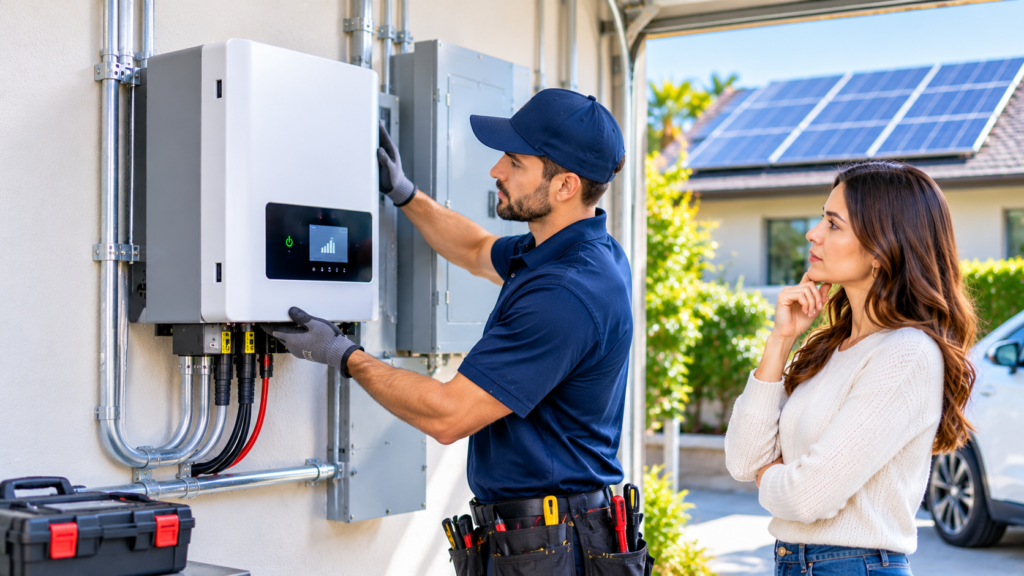
If your solar inverter has stopped working, one of the first questions you probably have is: How much does it cost to replace a solar inverter in California?
The answer depends on your solar system’s size, inverter type, equipment brand, installation requirements, and whether additional electrical work is needed.
For a typical residential solar system, a standard string inverter replacement may cost approximately $1,000–$2,500 installed, while a more complex hybrid inverter replacement can reach $3,000–$6,000 or more. Microinverter replacement costs depend on how many units have failed and the labor required to access them.
These are planning estimates, not guaranteed contractor quotes. Actual prices in Los Angeles and other California cities can vary.
In this guide, we’ll break down solar inverter replacement costs, explain what affects the final price, compare repair versus replacement, and help you understand when it makes sense to upgrade your existing solar system.
Average Solar Inverter Replacement Cost in California
The cost of replacing a solar inverter depends heavily on the equipment installed in your home.
Here is a general estimate for residential solar systems in California:
| Inverter type | Estimated replacement cost |
|---|---|
| Standard string inverter | $1,000–$2,500 |
| Hybrid solar inverter | $3,000–$6,000+ |
| Single microinverter | $150–$900 |
| Complete microinverter system | $3,000–$6,000+ |
| Solar power optimizer replacement | $400–$600 per unit |
These are approximate budgeting ranges, not fixed statewide prices. Microinverter costs can vary significantly depending on equipment, roof access, labor, and whether one or multiple units need replacement.
A simple like-for-like inverter replacement is generally less expensive than changing the system architecture or adding battery compatibility.
1. String Solar Inverter Replacement Cost
String inverters are commonly used in residential and commercial solar installations. They connect multiple solar panels into one or more strings and convert the electricity into usable AC power.
If your existing string inverter fails, replacing it with a compatible unit may be one of the more straightforward solar repair projects.
Estimated installed cost: $1,000–$2,500
The final price depends on:
- Inverter capacity and manufacturer.
- Equipment availability.
- Existing wiring and disconnect condition.
- Labor and system commissioning.
- Permit or inspection requirements, where applicable.
For example, a homeowner with a 7 kW solar system may be able to replace an older inverter with a compatible modern unit without changing the entire solar installation.
However, the replacement must be compatible with the existing panels, electrical design, and utility interconnection requirements.
2. Hybrid Solar Inverter Replacement Cost
A hybrid inverter is designed to work with solar panels and compatible battery storage equipment.
Homeowners considering backup power or greater control over their energy usage may choose a hybrid inverter when replacing an older standard inverter.
Estimated replacement cost: $3,000–$6,000 or more
The price can increase depending on:
- Inverter capacity.
- Battery compatibility.
- Backup power configuration.
- Electrical panel modifications.
- Additional equipment and wiring.
- Installation and commissioning requirements.
Remember that replacing a hybrid inverter does not automatically include a new battery. Battery equipment and installation are separate costs unless specifically included in the proposal.
If you plan to add battery storage later, discuss future compatibility before choosing a replacement.
3. Microinverter Replacement Cost
Unlike string inverters, microinverters are installed at individual solar panels or panel-level locations.
If one microinverter fails, the remaining units may continue operating normally. This means a homeowner may only need to replace the affected unit rather than the entire solar conversion system.
Estimated cost for one replacement: $150–$900
The actual price depends on:
- Microinverter model.
- Whether the equipment is under warranty.
- Roof accessibility.
- Labor and service-call charges.
- Required electrical testing.
- Number of failed units.
For a system with approximately 20 panels, replacing multiple microinverters can cost several thousand dollars.
Before approving replacement work, ask the technician to identify the exact failed units. A monitoring warning alone does not always prove that a microinverter has physically failed.
What Factors Affect Solar Inverter Replacement Costs?
Two California homeowners can have similar solar systems but receive very different replacement estimates.
Here are six important factors that influence the total project cost.
1. Solar System Size
A larger solar installation may require a higher-capacity inverter or multiple inverter units.
For example:
- A small 4 kW system may need a lower-capacity inverter.
- A 7 kW residential system may require a larger replacement unit.
- A commercial solar installation may need multiple inverters and more complex commissioning.
The replacement must be correctly sized for the existing system rather than selected only by its purchase price.
2. Inverter Brand and Model
Different manufacturers offer different inverter technologies, capacities, warranty terms, and monitoring features.
The cost of a replacement can change depending on whether the existing equipment can be replaced with a compatible model or requires additional system modifications.
A like-for-like replacement may be simpler than switching to a different inverter platform.
3. Labor and Installation Complexity
Labor is an important part of the total replacement price.
A straightforward wall-mounted inverter replacement may require less work than a system involving difficult access, damaged conduit, outdated disconnects, or complicated wiring.
Roof-mounted microinverters can also require additional access and installation work.
4. Electrical Panel Upgrades
Sometimes the inverter is not the only component that needs attention.
During an inspection, a technician may discover that the electrical panel, breaker, disconnect, or existing wiring requires modification.
For example, an older electrical panel may not be suitable for the proposed replacement equipment.
An electrical panel upgrade is a separate project and can add thousands of dollars depending on the scope of work.
5. Permits and Inspections
California solar installations must meet applicable electrical and building requirements.
Whether a replacement requires a permit, plan review, inspection, or updated utility documentation depends on the local jurisdiction and the extent of the work.
A simple replacement with equivalent equipment may have different requirements from a major system modification.
Ask your contractor whether permit and inspection costs are included in the written estimate.
6. Warranty Coverage
Your existing inverter may still be covered by its manufacturer’s warranty.
Some warranties cover replacement equipment but may have separate conditions for labor, shipping, troubleshooting, or installation.
Before paying for a replacement, check:
- Original installation date.
- Inverter model and serial number.
- Warranty duration.
- Whether the warranty is transferable.
- Whether labor and service costs are included.
A warranty claim could significantly reduce your out-of-pocket equipment expense.
Solar Inverter Repair vs. Replacement: Which Is Better?
Not every inverter problem requires a complete replacement.
Sometimes the issue comes from a faulty connection, external disconnect, monitoring device, or another component that can be addressed without replacing the entire inverter.
However, major internal damage may make replacement the more practical option.
| Situation | Better option to investigate |
|---|---|
| Minor external connection issue | Repair |
| Monitoring connection failure | Troubleshooting |
| Inverter still under warranty | Warranty claim |
| Major internal inverter failure | Replacement |
| Repeated expensive repairs | Replacement evaluation |
| Older inverter with limited parts availability | Replacement evaluation |
A useful way to compare the two options is to request a written diagnosis and separate repair and replacement estimates.
Do not approve a complete inverter replacement based only on a generic error message.
When Should You Replace Your Solar Inverter?
Solar inverters do not always last as long as solar panels. Depending on the equipment and operating conditions, a residential string inverter may need replacement during the life of the solar array.
Consider a replacement evaluation when:
- Your inverter repeatedly shuts down.
- Solar production has dropped significantly.
- The equipment has major internal damage.
- Repairs are becoming frequent.
- Replacement parts are difficult to obtain.
- The inverter is no longer covered by warranty.
- Your existing equipment cannot support your planned system upgrades.
A professional inspection should confirm whether the inverter itself is failing or another component is causing the problem.
Is Upgrading to a Hybrid Inverter Worth It in California?
If your current inverter needs replacement, you may have an opportunity to consider a hybrid system.
A hybrid inverter can provide a pathway to compatible battery storage and backup power, depending on the equipment and system design.
It may be worth evaluating if:
- You want to add battery storage.
- You want backup power for selected household circuits.
- You are planning future solar system modifications.
- Your existing inverter is outdated.
- You want to coordinate solar generation and battery charging.
However, a hybrid inverter is not automatically the best choice for every property.
If you only need to restore an existing solar system, a compatible standard replacement may be more economical.
Compare the additional equipment and installation costs against the benefits you actually need.
How to Avoid Overpaying for Solar Inverter Replacement
Before choosing a contractor, follow these practical steps.
1. Get the inverter diagnosed first.
Ask for the exact fault and whether the problem is actually inside the inverter.
2. Check the warranty.
Confirm whether the manufacturer will provide replacement equipment or cover part of the service cost.
3. Compare written estimates.
Request separate prices for equipment, labor, permits, electrical modifications, and commissioning.
4. Confirm compatibility.
Make sure the replacement inverter works with your existing solar panels, electrical configuration, and utility requirements.
5. Ask about monitoring and testing.
The replacement should include appropriate system configuration, commissioning, and verification of solar production.
6. Avoid choosing based on the lowest price alone.
Incorrect equipment selection or incomplete installation can create additional problems later.
Need Solar Inverter Replacement in Los Angeles?
If your solar inverter has stopped working, your system is producing less electricity, or you are considering upgrading to a battery-compatible inverter, the first step is understanding what your existing system actually needs.
ReVamp Energy provides electrical and renewable energy services for residential and commercial properties across Los Angeles and Southern California.
Our team can help assess existing solar equipment, investigate electrical issues, and evaluate suitable replacement options based on your property’s requirements.
Whether you need an inverter replacement assessment, solar system troubleshooting, or electrical upgrades, getting the right diagnosis can help you avoid unnecessary equipment costs.
Get Your Free Energy Consultation
Visit ReVamp Energy to discuss your solar and electrical project.
Frequently Asked Questions
How much does it cost to replace a solar inverter in California?
A standard residential string inverter replacement may cost approximately $1,000–$2,500 installed. Hybrid inverter replacements can cost $3,000–$6,000 or more. Actual prices depend on equipment, labor, permits, and system requirements.
How much does it cost to replace a 7 kW solar inverter?
The price depends on the inverter type, brand, compatibility, and installation conditions. A standard replacement may fall within the typical $1,000–$2,500 installed range, but a site-specific estimate is necessary.
How long does it take to replace a solar inverter?
A straightforward residential replacement may be completed in part of a day. More complicated installations involving electrical upgrades, inspections, or utility coordination can take longer.
Can I replace my solar inverter without replacing my panels?
Yes. In many cases, an inverter can be replaced while keeping the existing solar panels. The new inverter must be compatible with the panel configuration and electrical design.
Does homeowners insurance cover solar inverter replacement?
Coverage depends on your insurance policy and the cause of the damage. Sudden damage from a covered event may qualify, while ordinary wear, aging, or equipment failure may not. Check your policy and speak with your insurer.
Is solar inverter replacement eligible for a tax credit in 2026?
Do not assume that an inverter-only replacement qualifies for a federal tax credit. Residential clean-energy tax-credit rules changed for 2026, and eligibility depends on the specific program and applicable law. Consult a qualified tax professional before including an incentive in your budget.
Should I repair or replace a 10-year-old solar inverter?
It depends on the condition, warranty, fault, repair cost, and availability of replacement parts. If repairs are expensive or recurring, comparing a new inverter against the cost of continued repairs may be worthwhile.
Does replacing a solar inverter require a permit in California?
Requirements vary by jurisdiction and project scope. Ask your contractor to confirm local permitting, inspection, and utility documentation requirements before work begins.
Final Takeaway: Solar inverter replacement costs in California depend on more than the equipment price. The inverter type, labor, warranty, electrical condition, and local requirements all affect the final estimate. Get the system inspected before deciding whether to repair, replace, or upgrade.